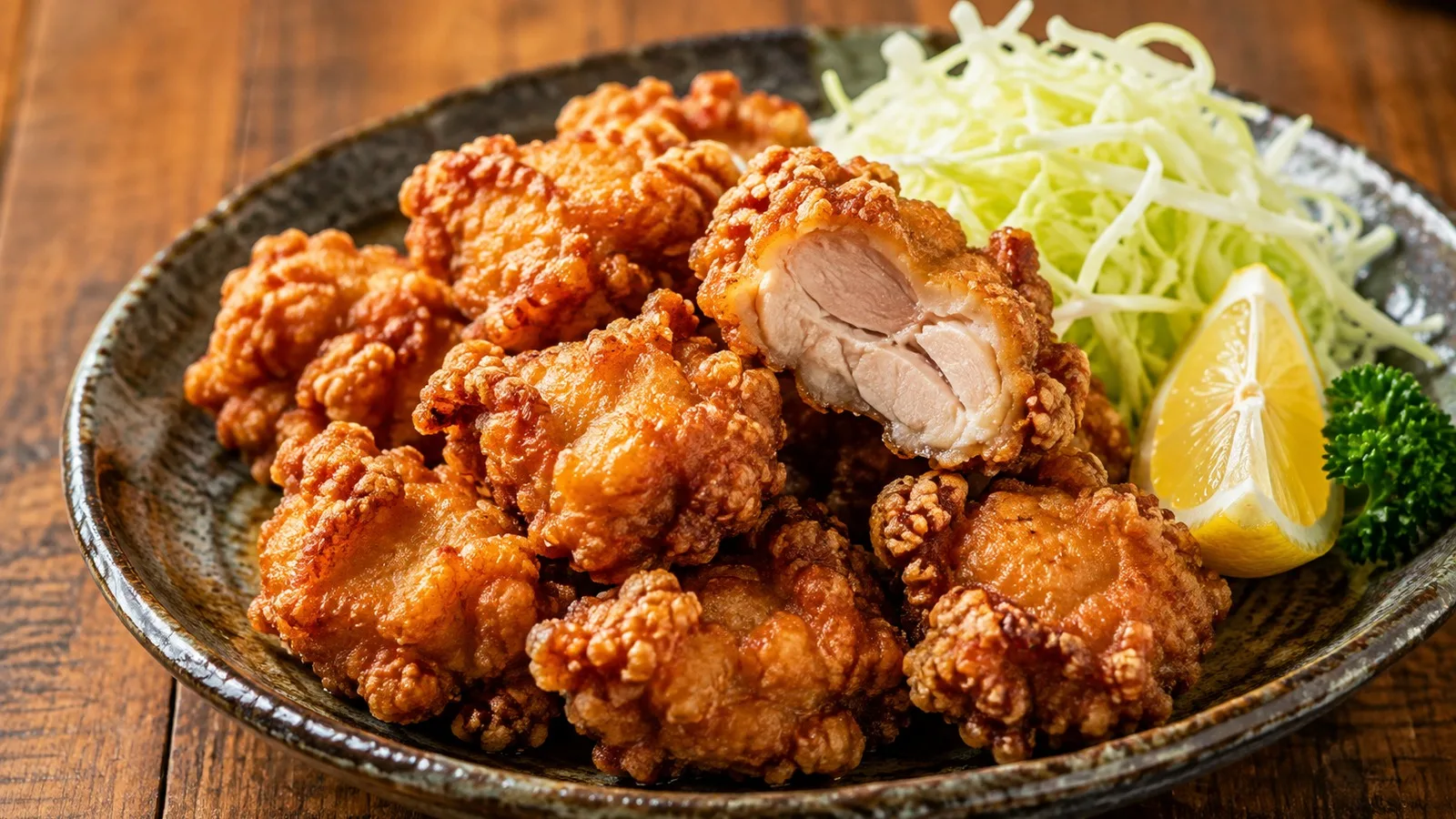
In this version of karaage, the drumstick is cut into standardized pieces, receives a short marinade and a thin layer of potato starch. The first frying cooks the center without darkening the crust too much; the second, hotter and briefer, finishes drying and gilding the surface.
Ingredients
For the chicken and marinade
• 600 g of boneless chicken thighs, preferably with skin • 30 ml of soy sauce • 15 ml of culinary sake • 10 g of finely grated fresh ginger • 5 g of finely grated garlic • 5 ml of toasted sesame oil • 1 g of ground black pepper
For breading and frying
• 60 g potato starch • Enough neutral oil to form a 4 to 5 cm layer in the pan, about 1 liter in a 20 cm pan
To serve
• 120 g of very fine cabbage, optional • 1 lemon, cut into wedges • 2 sprigs of parsley, optional
Preparation method
1. Cut the chicken into uniform size
Only remove large excess fat and loose ends of skin. Cut the thigh into pieces weighing 30 to 35 g, approximately 4 to 5 cm. Similar weight helps all pieces reach the point in the same time frame.
2. Make the marinade
Mix soy sauce, sake, ginger, garlic, sesame oil and pepper. Add the chicken and massage until all the pieces are coated. Cover and leave in the fridge for 30 minutes.
3. Prepare the frying
Place the oil in a deep pan and heat to 160°C. Leave a rack on a baking sheet or platter next to the stove to drain the chicken without trapping steam in the crust.
4. Cover with starch
Remove the pieces from the marinade, letting the excess liquid drip for a few seconds. Dip each piece in potato starch, press lightly to adhere and shake off any loose excess. The layer should be thin and irregular, without a thick layer of powder. Only bread the amount that will go directly to each batch.
5. Make the first frying at 160 °C
Fry 4 to 5 pieces at a time for about 2 minutes and 30 seconds to 3 minutes. For the first 30 seconds, avoid stirring so the topping sets; then turn as needed. Remove to the wire rack and let rest for 2 minutes while the oil returns to 160°C. Repeat with the remaining batches.
6. Do the second frying at 180 °C
Raise the oil to 180°C. Return the chicken in small batches and fry for 45 to 60 seconds, until the crust is firm, dry and golden. Before serving, check the thickest piece with a culinary thermometer: the center must reach at least 74°C. If it has not yet reached this temperature, return the piece to the hot oil for short intervals and measure again.
7. Drain and serve
Leave the karaage on the wire rack for 2 to 3 minutes, without stacking. Serve while still hot with sliced cabbage, lemon wedges and parsley, if desired.
Right spot / how to know it’s ready
The finished crust is golden, dry to the touch and with irregular relief; There should be no white spots of raw starch or a damp surface. The piece should feel light and crunchy when touched with tongs. For safety, the decisive criterion is an internal temperature of at least 74 °C in the center of the thickest piece.
Tips for the recipe to work out
Standardize the pieces
Pieces weighing 30 to 35 g balance the crust and interior. If there is a big difference in size, the smaller ones will dry out before the larger ones cook completely.
Control the oil temperature
Use a thermometer and wait for the oil to regain temperature between batches.. Adding too much chicken at once lowers the temperature and leads to a more oily crust.
Bread close to frying time
The starch begins to absorb the marinade as soon as it touches the chicken. If the breaded pieces are left waiting too long, the layer may turn into a paste and lose some of its irregular texture.
Drain in a grid, not stacked
The grill lets steam escape from all sides. Stacking the karaage while it is still very hot softens the crust at the points of contact.
Substitutions and variations
Can I use cornstarch?
Yes. Use the same amount. The crust tends to be a little thinner and more uniform than with potato starch, but it's still crunchy.
Can I use thighs without skin?
Yes. The recipe works, but it loses some of the fat and crunchy texture that the skin offers. Avoid prolonging frying longer than necessary after the center reaches 74°C.
What to use instead of sake?
You can omit the sake or replace it with 15 ml of water. The seasoning becomes less aromatic, but the proportion of liquid in the marinade remains controlled.
Can I make it with chicken breast?
You can, but the breast dries out more easily. Cut into slightly smaller pieces, 25 to 30 g, reduce the first frying as necessary and confirm 74°C in the center before serving.
How to store
If you have leftovers, place them in a shallow container and refrigerate within 2 hours of preparation. Keep refrigerated at 4°C or below and consume within 3 to 4 days. To freeze, let it cool under refrigeration, distribute the pieces without crowding until they firm up and then pack well; To better preserve the texture, use within 2 months.
To reheat, prefer oven or air fryer at 190 °C until the surface becomes crispy again and the center reaches 74 °C. The microwave heats it, but it tends to soften the crust.
How to serve / side dishes
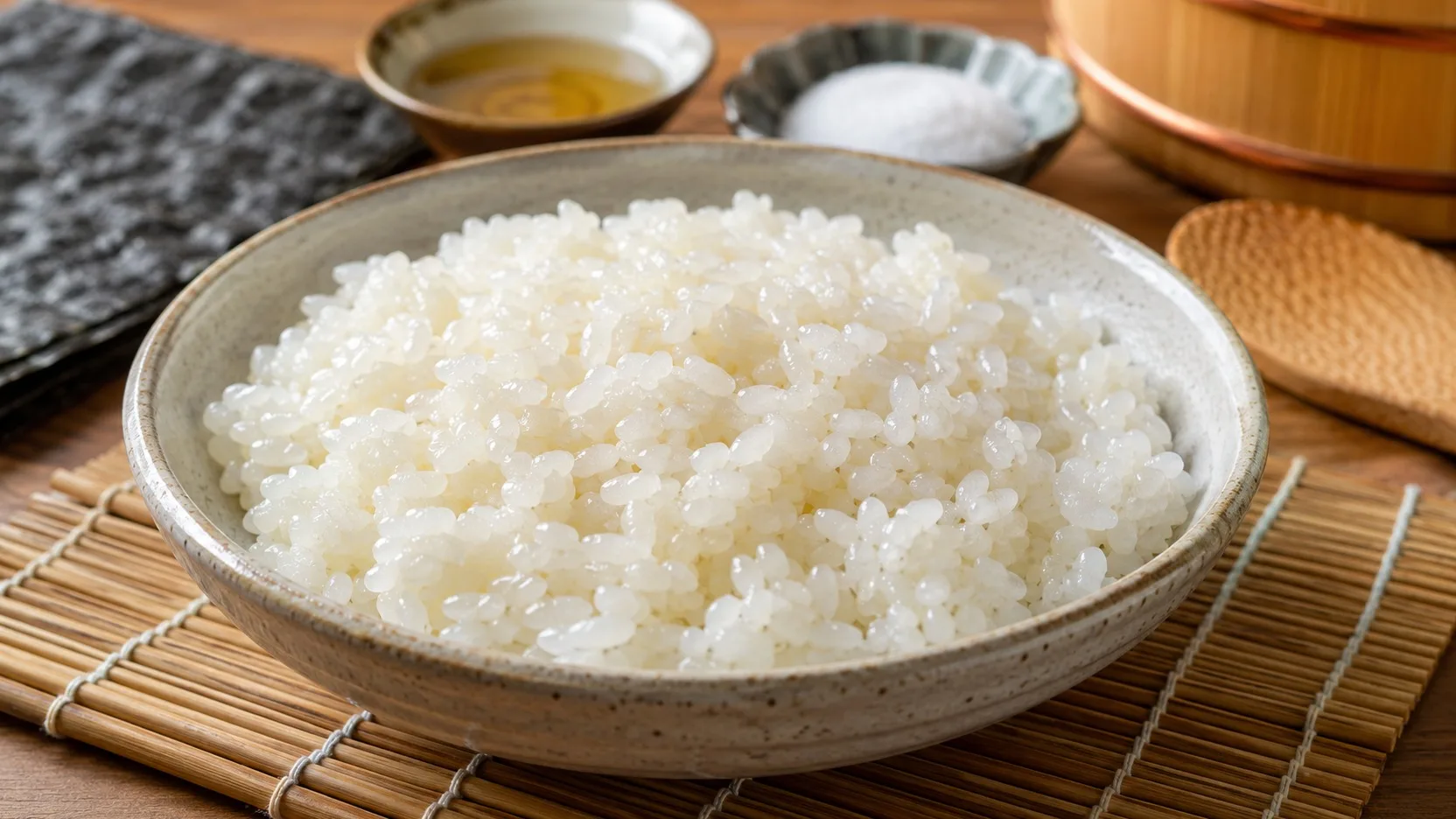
Karaage can be served as a main dish or snack. Sliced cabbage and lemon balance the frying; Plain Japanese rice and steamed vegetables or salad complete the meal without competing with the seasoning of the chicken.
Common mistakes
Why did the cover come off in the oil?
The chicken may have had too much liquid marinade, received too much starch, or been stirred before the crust had set. Let the excess marinade drip off, make a thin layer and wait about 30 seconds before moving the pieces.
Why did the karaage become oily?
The most common cause is an excessive drop in oil temperature. Fry in small batches and return to 160 °C in the first stage and 180 °C in the second before adding a new batch.
Why did it darken on the outside before cooking in the center?
Too large pieces or too hot oil in the first step will cause the surface to brown early. Standardize the cut and keep the first frying at 160 °C; confirm the center with a thermometer.
Why did it lose its crunch quickly?
Trapped steam is the main enemy after frying. Drain on a rack, do not cover and avoid stacking while the karaage is very hot.