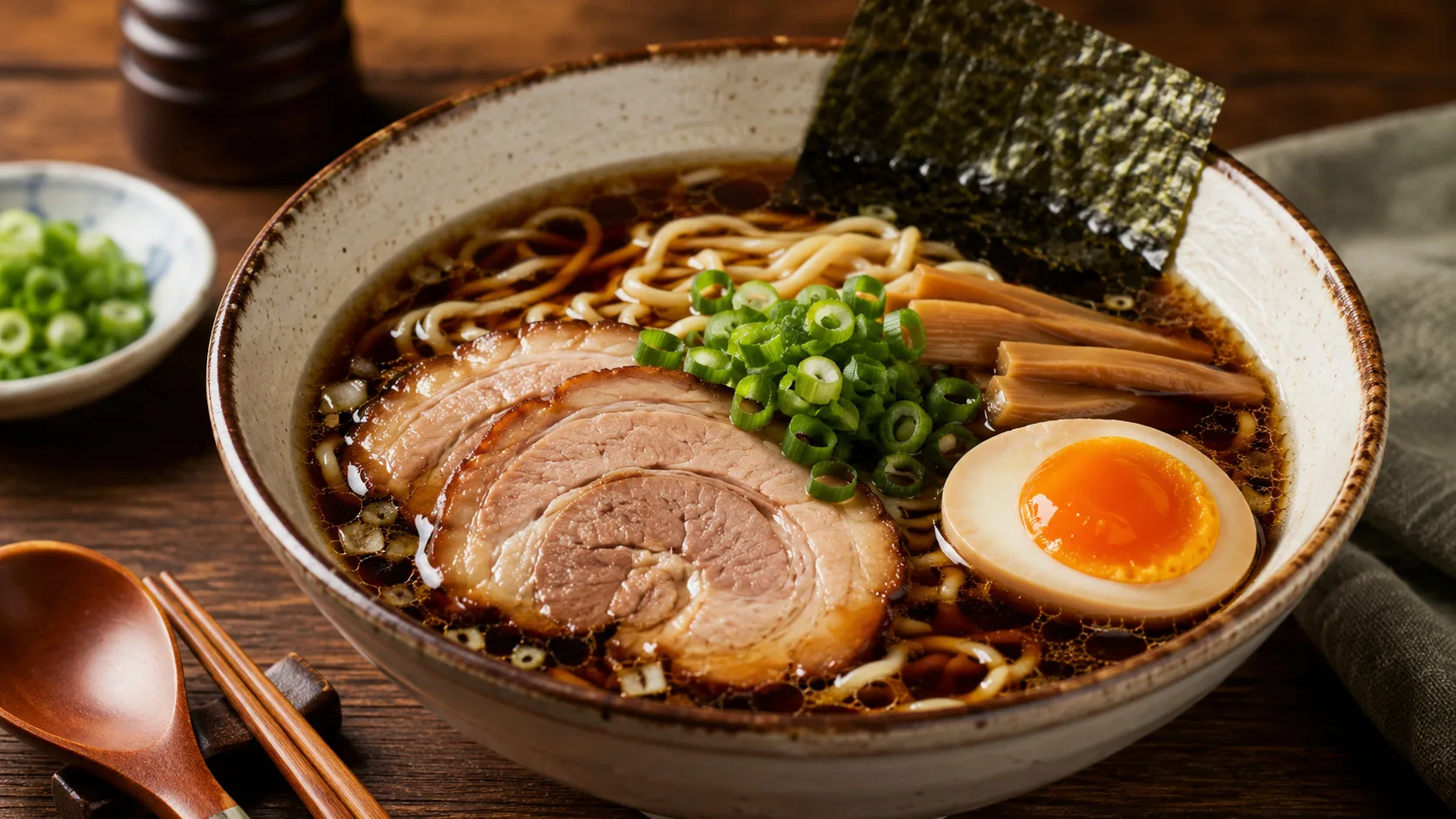
This domestic version organizes the shoyu ramen into separate components so that assembly is quick and the result is balanced. The broth is deliberately mild and unsalted; the intensity comes from the soy sauce measured in each bowl. Make the chashu and eggs in advance when possible and have noodles, broth and toppings ready for a few minutes of assembly.
Suggested schedule
The day before or 6 to 12 hours in advance
Prepare the chashu and marinated eggs. Resting helps the pork firm up for slicing and gives the egg time to absorb the marinade.
About 2 hours before serving
Start the broth. While it cooks over low heat, make the tare and aromatic oil and organize the toppings.
In the final 15 minutes
Heat the broth without letting it boil hard, put plenty of water for the noodles on the fire and heat the bowls. Cook the pasta only when everything is ready to assemble.
Ingredients
For the broth
• 700 g chicken wings
• 500 g of chicken carcass or back, in pieces
• 2.2 liters of cold water
• 10 g of kombu
• 12 g dried shiitake
• 120 g onion, cut in half
• 20 g fresh ginger, sliced
• green part of 2 spring onions
For the soy sauce
• 120 ml soy sauce
• 30 ml of mirin
• 30 ml of culinary sake
• 5 g of sugar
For aromatic oil
• 60 g chicken skin, in small pieces
• 40 ml of neutral oil
• 1 clove of garlic, lightly crushed
• 10 g fresh ginger, sliced
• white part of 1 chive, in pieces
For chashu
• 600 g skinless pork belly, in a block
• 10 ml of neutral oil
• 100 ml soy sauce
• 80 ml culinary sake
• 60 ml of mirin
• 300 ml of water
• 35 g of sugar
• 20 g fresh ginger, sliced
• green part of 2 spring onions
For the marinated eggs
• 4 large eggs; for creamy yolk, choose pasteurized shell eggs when available.
• 60 ml of water
• 60 ml soy sauce
• 30 ml of mirin
• 15 ml of culinary sake
• 10 g of sugar
For assembly
• 480 g fresh ramen noodles, about 120 g per bowl
• 60 g of pickled menma or bamboo shoots, drained
• 2 sheets of nori, cut in half
• 40 g of chives, very thinly sliced
• sliced chashu, about 3 slices per bowl
• 4 marinated eggs, cut in half
Preparation method
1. Seal and cook the chashu
Dry the pork belly. Heat the oil in a thick-bottomed pan and brown the block on all sides for about 8 to 10 minutes. Add shoyu, sake, mirin, water, sugar, ginger and the green part of the chives. When it boils, lower the heat, partially cover and cook at a very gentle boil for 70 to 80 minutes, turning the meat every 15 to 20 minutes. The liquid should reduce, but not dry; add a little water if the bottom starts to become exposed too soon. Remove the meat and let it cool in the sauce. For cleaner slices, refrigerate the block for at least 2 hours, ideally overnight.
2. Prepare and marinate the eggs
Bring enough water to cover the eggs until boiling. For a creamy yolk, use pasteurized eggs and cook for 7 minutes from the first egg in; immediately transfer to ice water for 15 minutes. If the eggs are not pasteurized and maximum safety is your priority, cook until the yolk is firm. In another pan, boil the water, soy sauce, mirin, sake and sugar from the marinade for 1 minute; cool completely. Peel the eggs, place them in a food-safe bag or small container, cover with cold marinade and refrigerate for 6 to 12 hours.
3. Make the broth clear
Place wings and carcass in a large pan, cover with cold water and heat slowly. As soon as foam and impurities rise, remove them with a slotted spoon. When the broth is almost boiling, add kombu, shiitake, onion, ginger and scallions. Maintain just a very gentle boil for 1 hour and 45 minutes to 2 hours, without stirring and without covering completely. Remove the kombu after about 30 minutes to prevent the marine note from taking over. Strain without pressing the solids. Measure the liquid; top up with hot water or reduce gently until you get about 1.4 to 1.5 liters of broth.
4. Prepare the soy sauce
Mix soy sauce, mirin, sake and sugar in a small saucepan. Heat just until the sugar dissolves and the liquid starts to steam; cook for 1 minute and turn off. Book. Shoyu brands vary greatly in salt, so assembly starts with 25 ml of tare per bowl and can go up to 30 ml after tasting.
5. Make the aromatic oil
Place chicken skin and oil in a small, still cold frying pan. Heat over low heat for 10 to 15 minutes, until the skin releases fat and turns golden. Add garlic, ginger and scallions for the final 3 minutes. Strain. You need about 40 ml of aromatic oil for the four bowls.
6. Prepare the toppings and heat everything up
Slice the cold chashu into approximately 5 to 6 mm pieces. If you want, quickly brown the slices in a very hot frying pan. Drain the bamboo shoot, cut the eggs in half and keep green onions and nori within reach. Heat the broth until it is very hot, without aggressively boiling. Fill the bowls with boiling water for about 1 minute and discard the water immediately before assembly.
7. Cook the noodles last
Boil a large pot of unsalted water. Cook the noodles according to the package, stirring to separate the strands. For fresh pasta, the time is usually short; remove when it is still elastic and firm. Drain very well and do not rinse.
8. Assemble each bowl
Place 25 ml of tare and 10 ml of aromatic oil in the bottom of each hot bowl. Add 350 ml of very hot broth and mix. Taste a spoonful: if it is too soft, add tare little by little, without exceeding about 30 ml per bowl before tasting again. Add 120 g of drained noodles, loosen them with chopsticks or tongs and place 3 slices of chashu, 2 egg halves, bamboo shoots, chives and nori on top. Serve immediately.
Right spot / how to know it’s ready
The broth should be clear to slightly golden, with a noticeable chicken flavor and umami, but not very salty before tare. If it's cloudy and greasy, it probably boiled too hard; This doesn't make it unusable, but it changes the style of the result.
The chashu should be soft when pierced, without falling apart when slicing. To be safe, the thickest part of the meat needs to exceed 63°C and rest for at least 3 minutes; In this long cooking process, it usually passes this point easily.
The noodles should arrive in the bowl elastic, separated and without excess water. The final soup should be hot, aromatic and clearly marked by the soy sauce, without looking like just salt water.. The initial proportion of 350 ml of broth to 25 ml of tare allows you to adjust the saltiness depending on the brand of soy sauce.
Tips for the recipe to work out
Do not salt the base broth
The tare already contains soy sauce and other seasonings. Salting the broth from the beginning takes away the adjustment margin for each bowl and can leave the result aggressive after reduction.
Control the boiling of the broth
Occasional small bubbles help maintain a clearer broth. Hard boiling emulsifies fat and particles, making the soup more opaque.
Assemble like a production line
Once the noodles are in the water, there's no time to look for nori or chop scallions. Broth, tare, oil, toppings and bowls need to be ready before cooking the pasta.
Drain the pasta firmly
Water trapped in the noodles dilutes exactly the balance you just measured between broth and tare.
Slice the cold chashu
The hot belly is too soft and tends to break. Cooling before slicing gives even slices; reheat them quickly before serving.
Substitutions and variations
If you can't find ramen-specific noodles
Use fresh pasta for yakisoba or other wheat noodles with a similar profile. The dish remains functional, but the texture becomes less elastic when the dough is not alkaline. Instant noodles can be used in an emergency if you discard the seasoning sachet and just use the noodles.
If you don't find menma
Use well-rinsed pickled bamboo shoots. The texture will be close, but it will lack menma's characteristic fermented seasoning; you can heat it quickly with a spoonful of tare diluted in water.
If you don't use alcohol
In the marinated egg, replace the sake with water. In tare and chashu, it is also possible to use water instead of sake; for mirin, replace each 30 ml with 25 ml water plus 5 g sugar. The result is less aromatic and less complex, but maintains the basic sweet-salty balance.
If the soy sauce available is too salty
Do not dilute all the tare at once. Start assembling with 20 to 25 ml per bowl and adjust little by little. Brazilian and Japanese brands can vary greatly in salt and sweetness.
If you can't find kombu
Increase the dried shiitake in the broth to 20 g. The result loses part of the marine note and becomes more earthy, so it is an adaptation, not an identical replacement.
How to store
Store broth, chashu, tare, oil and eggs in separate containers. Refrigerate the cooked components for up to 2 hours and, for the broth, prefer shallow containers to cool faster. Consume refrigerated broth and chashu within 3 to 4 days. Reheat the broth until boiling and heat the chashu completely before serving.
Creamy yolk eggs must be made with pasteurized eggs; Always keep them refrigerated and consume within 3 days. Hard-boiled eggs with firm yolks can be stored for up to 1 week in the refrigerator, although the marinade will make them saltier over time.
Broth and chashu can be frozen separately; for better domestic quality, preferably use within 3 months. Do not freeze noodles that have already been cooked in the broth and do not store bowls assembled, as the noodles will continue to absorb liquid and lose texture.
How to serve / side dishes
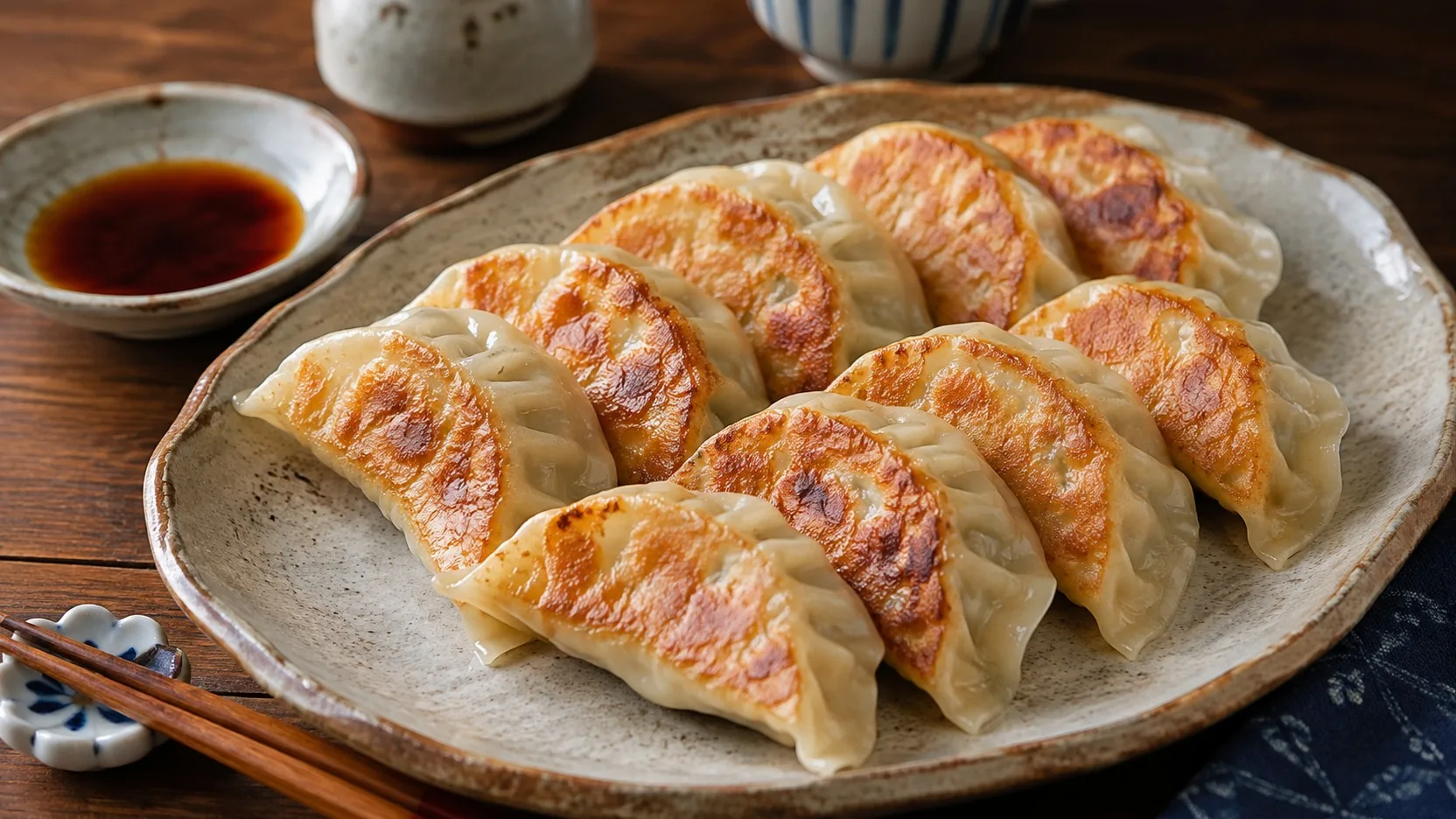
Serve the ramen as soon as the last bowl is assembled. If you want to complete the meal without competing with the broth, accompany it with gyoza, seasoned Japanese cucumber or a small leaf salad. A little Japanese shichimi pepper or chili oil can be offered on the side for those who want more heat.
Common mistakes
Why is my broth cloudy?
The most common cause is strong boiling or moving the bones during cooking. Next time, keep the heat low and skim off the foam at the beginning. If it's already cloudy, strain well and follow; the taste may still be good, just the visual style will be different.
Why was the soup salty?
The soy sauce varies between brands and the broth may have reduced more than expected. Use measured 350 ml of broth and start with less tare. If it's overcooked, correct it with unsalted broth or hot water, never with more oil.
Why did the noodles soften before I finished eating?
They were probably cooked too soon or waiting to be assembled. Cook the pasta only when all other components are ready and serve immediately.
Why did the chashu fall apart when cutting?
The meat was hot or cooked until it lost its structure. Cool completely before slicing and use a very sharp knife. If it is too soft, make slightly thicker slices and reheat carefully.
Why didn't the egg take on color evenly?
When the container is large, part of the egg remains outside the marinade. Use a food-safe bag, remove the air or choose a pot small enough to keep the eggs submerged; turn them once during the marinade if necessary.