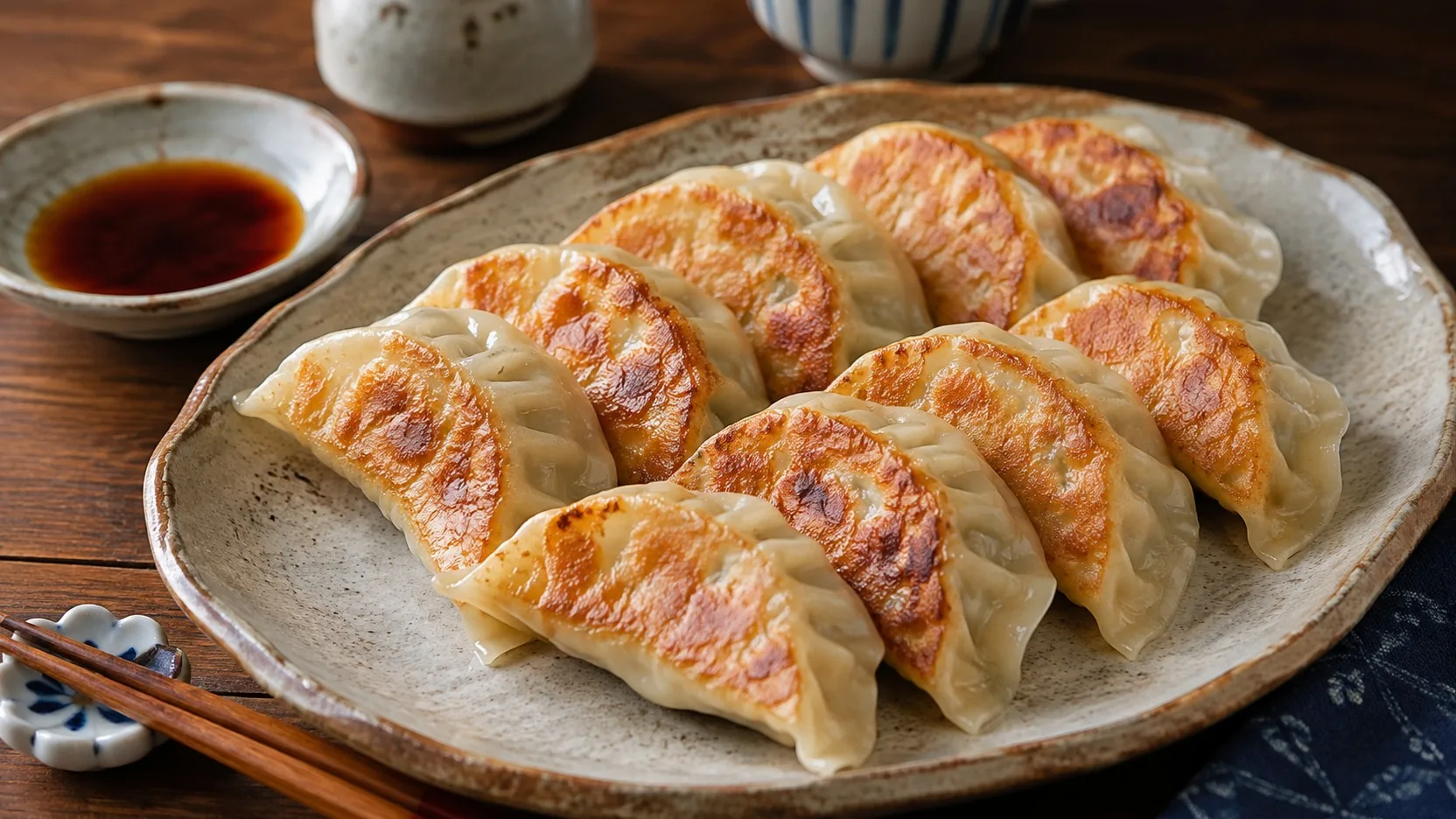
This Japanese gyoza is prepared from scratch: the dough is rolled out thinly, the filling contains pork and well-drained cabbage, and the cooking process combines browning, steaming and drying the base until crispy.
Ingredients
For the dough
• 160 g of wheat flour
• 2 g of salt
• 80 g of freshly boiled water, plus up to 15 g if necessary
• 20 g cornstarch or potato starch, for sprinkling
For the filling
• 160 g of ground pork
• 140 g of green cabbage, without the hard core and finely chopped
• 3 g of salt, to dehydrate the cabbage
• 20 g of finely chopped chives
• 1 small clove of garlic, about 4 g, grated or finely chopped
• 6 g of grated fresh ginger
• 10 ml of soy sauce
• 8 ml toasted sesame oil
• 10 ml of culinary sake, optional
• 5 g cornstarch
• 1 pinch of black pepper
For cooking
• 20 ml of neutral oil, divided into 2 portions
• 120 ml of water, divided into 2 portions
• 5 ml of toasted sesame oil, to finish
For the sauce
• 30 ml of soy sauce
• 30 ml sugar-free rice vinegar
• Japanese chili oil or other chili oil, to taste, optional
Preparation method
1. Mix the dough
Dissolve the salt in 80 g of hot water. Place the flour in a bowl and add the water little by little, stirring with a spatula or chopsticks until moist lumps form. Squeeze the mixture with your hands. If there is still dry flour that is not incorporated, add more hot water in portions of 5 g, without exceeding the extra 15 g. The dough should be firm and pliable, not sticky.
2. Knead and let rest
Put the dough onto the counter and knead for 8 to 10 minutes, until smooth. Cover tightly or wrap in film and let rest for 30 minutes at room temperature. This rest reduces retraction when opening the discs.
3. Remove excess water from the cabbage
Mix the cabbage with the 3 g of salt and let it rest for 10 minutes. Squeeze very well with a clean cloth or with your hands to remove the liquid. The cabbage should be moist but not dripping.
4. Make the filling
Mix the pork with garlic, ginger, soy sauce, sesame oil, sake, starch and pepper for 1 to 2 minutes, until the dough becomes sticky and more uniform. Add the squeezed cabbage and chives. Keep the filling refrigerated while rolling out the dough.
5. Open the discs
Divide the dough into 24 pieces weighing approximately 10 g and keep them all covered. Work one at a time: make a ball, flatten it and roll it out until you get a disc measuring 8.5 to 9 cm, about 1 mm thick and the center slightly thicker than the edge. Sprinkle a little starch between the discs and keep them covered to prevent them from drying out.
6. Stuff and close
Place about 12 g of filling in the center of each disc. Lightly dampen half of the edge, fold in half and make 4 to 5 pleats on the front flap, pressing each fold against the back flap. Press the entire seam to eliminate gaps and gently flatten the base so the gyoza stays upright in the pan. Keep the assembled gyoza covered and cook or freeze immediately.
7. Brown, steam and leave the base crispy
Heat a 26 to 28 cm non-stick frying pan with a lid over medium heat. Add 10 ml of neutral oil and place 12 gyozas with the base resting on the frying pan, without overlapping. Brown for 2 to 3
minutes, until the underside is lightly golden. Add 60 ml of water from the side and cover immediately. Cook for 3 to 4 minutes. Uncover, wait for the water to evaporate completely, drizzle with half of the finishing sesame oil and continue for 1 to 2 minutes, until the base is golden and crispy. Repeat with the second half.
8. Check the cooking process and serve
For safety, center ground pork must reach 71°C. If using a thermometer, measure the filling of a more central unit of the batch. Mix soy sauce and rice vinegar for the sauce and add chili oil only if desired. Serve the gyozas immediately, crispy base side up.
Right spot / how to know it’s ready
The base should be uniformly golden and firm to the touch of the spatula, while the top of the dough should be soft and slightly translucent. The pleats remain closed and the filling is juicy but completely cooked. With ground pork, confirm 71°C in the center of one unit.
Tips for the recipe to work out
Control the water in the dough
Flour varies in absorption. Start with 80 g and add the rest little by little. Too soft dough sticks and tears; Too dry dough cracks when closing.
Do not leave discs and gyoza exposed
The dried edge loses grip and opens during cooking. Cover both the pieces of dough and the finished discs and closed gyozas.
Squeeze the cabbage well
Excess liquid dilutes the filling and softens the dough. After salting, remove as much water as you can without crushing the vegetable.
Don't overdo the filling
Around 12 g per unit leaves room for pleating and a firm seam. If the filling escapes when closing, remove a little instead of forcing the edge.
Wait for the water to evaporate before the final crunch
As long as there is free water in the pan, the base will not be dry. Only add the finishing sesame oil when the strong steam subsides and the bottom is practically dry.
Substitutions and variations
Can I use ready-made dough?
Yes. Use 24 to 26 gyoza discs and skip the dough preparation and opening steps. Industrial discs tend to be a little smaller; in this case, reduce the filling to about 10 g per unit.
Can I swap the pork?
Ground beef can be used in the same quantity, with a more intense flavor. Ground chicken or turkey also works, but tends to be less juicy; in this case, cook the filling until 74°C in the center.
Can I use nirá instead of chives?
Yes. The nirá gives a more pronounced garlic aroma and goes very well with the filling. Use the same amount by weight.
Wheat-free soy sauce makes the recipe gluten-free?
No. Even using tamari or another wheat-free sauce, the dough in this recipe still uses wheat flour. For a truly gluten-free version, it would also be necessary to reformulate the casing.
How to store
Assembled raw gyozas are best when frozen immediately after sealing. Place them without touching them on a baking sheet, freeze until firm and then transfer to a tightly sealed bag or container. For best texture, use within 1 month. Steam directly from the freezer and add about 1 to 2 minutes to the steaming time.
Cooked gyoza should be refrigerated within 2 hours, in a closed, shallow container, at 4°C or below. Consume within 3 to 4 days. To reheat, use a covered pan with a small splash of water and then let the base dry again; the center must reach 74 °C.
How to serve / side dishes
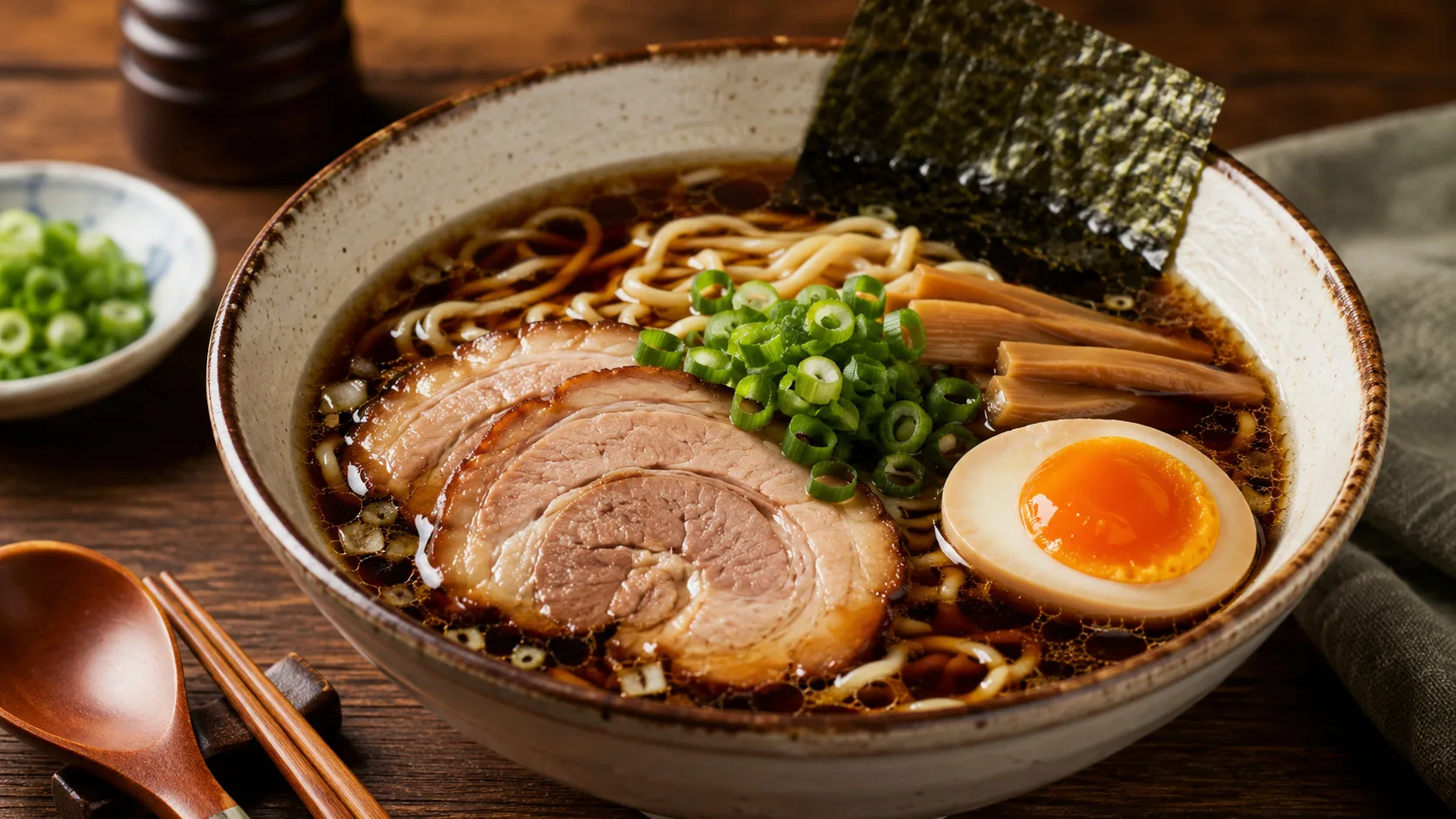
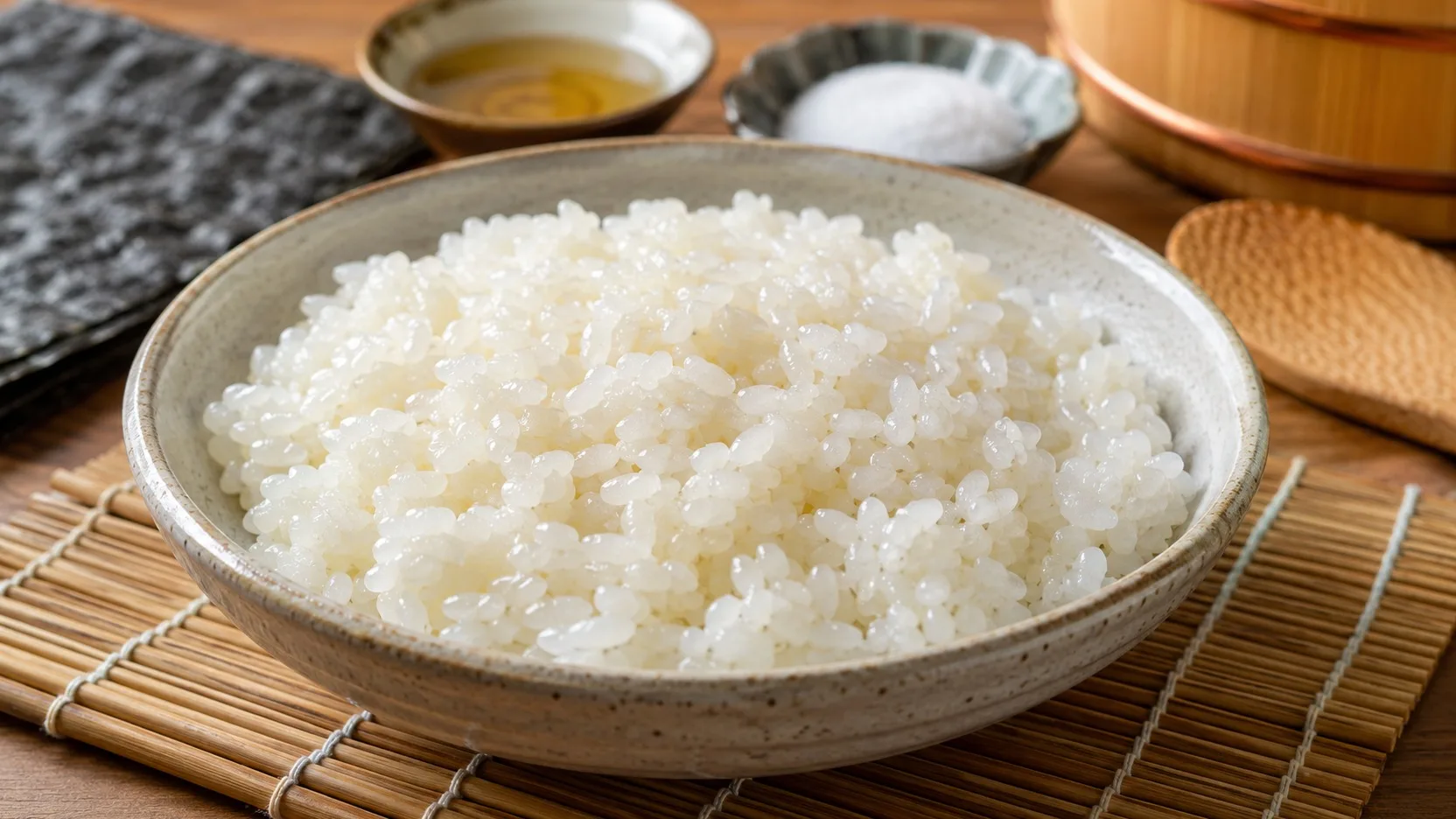
Serve as a snack or side dish, with soy sauce and vinegar. It also pairs well with plain Japanese rice, ramen, light miso soup or a cucumber salad with fresh acidity.
Common mistakes
Why did the dough tear when rolling out?
It may be dry, not well rested or opened too thinly. Cover the dough, wait 5 minutes if it is shrinking and keep about 1 mm on the disc, without thinning the center too much.
Why was the filling watery?
The most common cause is poorly squeezed cabbage or gyoza assembled too far in advance. Remove the water from the vegetable well and cook or freeze immediately after closing.
Why did the gyoza open in the frying pan?
Normally there is too much stuffing, a dry edge or a poorly pressed seam. Use less filling, moisten only the necessary edge and press all the pleats until there are no gaps left.
Why did the base stick or burn?
Too high heat can darken the base before the steam cooks the inside. Work over medium heat, use a frying pan in good condition and only try to release the gyoza when the water has evaporated and the crust has formed.