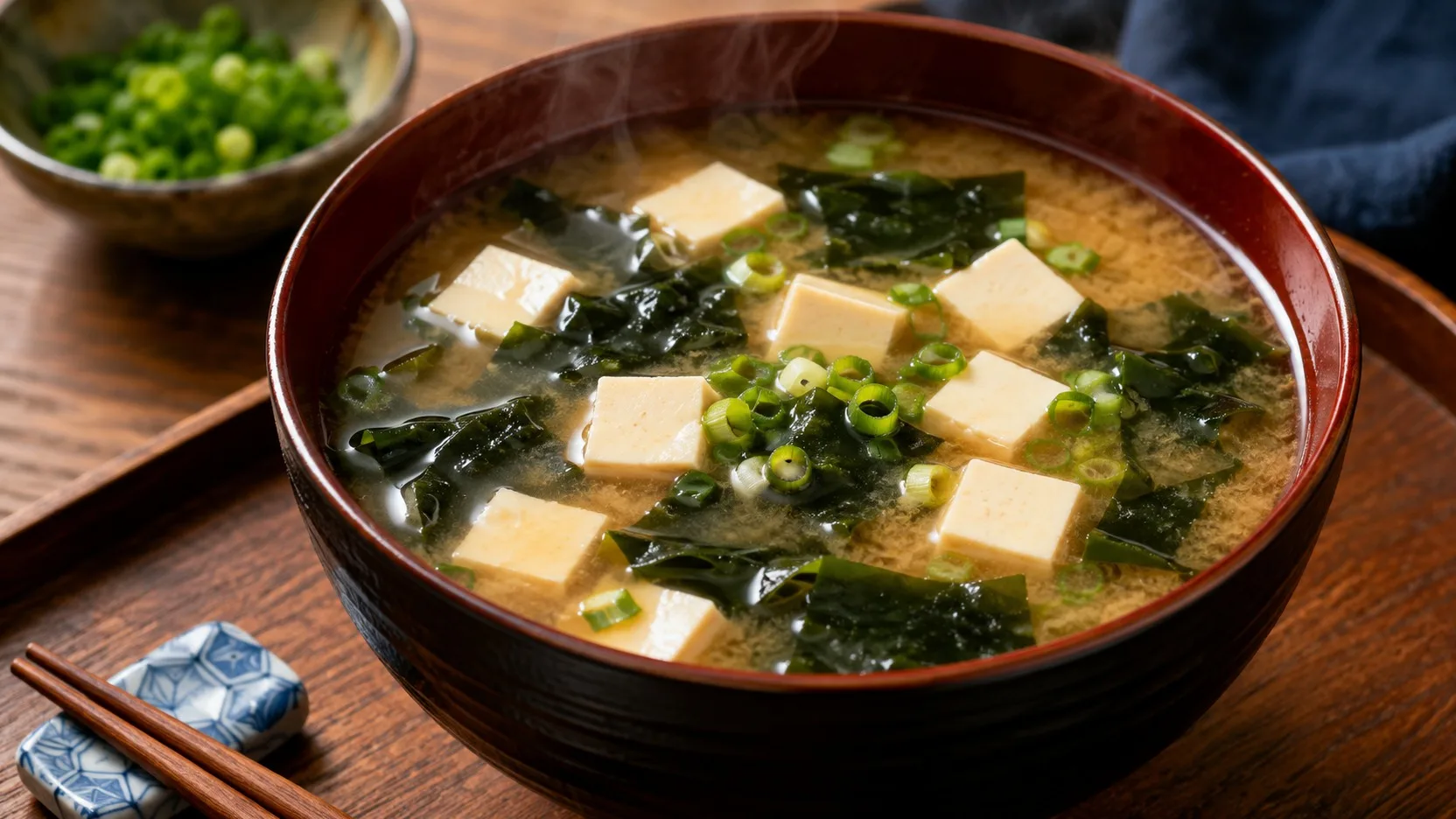
Ingredients
Para o dashi caseiro
• 800 ml de água fria
• 8 g de kombu seco
• 16 g katsuobushi (dried bonito flakes)
Para o missoshiro
• 650 ml do dashi preparado
• 160 g delicate soft or firm tofu, cut into cubes of approximately 1.5 cm
• 4 g dried wakame
• 40 g miso paste, preferably shiro or awase, plus up to 5 g to adjust if necessary
• 2 stalks of chives, finely sliced
• Água fria para hidratar o wakame
Preparation method
1. Hydrate the kombu
Place the 800 ml of water and the kombu in a pan and let it rest for 30 minutes. If there is visible dust on the surface of the kombu, simply wipe it with a slightly damp paper towel; não é necessário esfregar.
2. Make the dashi
Place the pan over medium heat. When small bubbles appear on the sides and the water is about to boil, remove the kombu. Turn off the heat, add the katsuobushi and leave to infuse for 2 minutes. Coe sem espremer os flocos. Meça 650 ml de dashi para a sopa; If there is a little missing due to evaporation or retention in the solids, top up with hot water.
3. Prepare the wakame and tofu
While the dashi heats, cover the dried wakame with plenty of cold water and let it hydrate for 3 to 5 minutes, or for the time indicated on the package. Escorra bem e corte pedaços muito grandes. Cut the tofu into cubes and handle gently so it doesn't break.
4. Heat the ingredients
Return the 650 ml of dashi to the pan and heat over medium heat until it starts to steam. Add the tofu and heat for about 2 minutes, without stirring vigorously. Add the drained wakame and heat for another 30 to 60 seconds.
5. Dissolve the miso outside of the boil
Turn off the heat. Place a ladle of the hot broth in a small bowl, add the 40 g of miso and mix until smooth. Return this mixture to the pan and stir gently. If necessary, return to low heat just until the soup is hot, without letting it boil vigorously.
6. Adjust the flavor and finish
Taste before serving. If it is too salty or strong, add unseasoned dashi or hot water in 50 ml portions, tasting after each addition. If it is weak, dissolve another 5 g of miso in a small ladle of broth and gradually add it. Finish with chives and serve immediately.
Right spot / how to know it’s ready
The broth should be slightly cloudy after the miso is dissolved, with an evident aroma of dashi and miso, tofu warmed to the center, and wakame soft, expanded and still with some texture. After adding the miso, the soup should be steaming, but not boiling intensely; This care helps preserve the freshest aroma of the paste.
Tips for the recipe to work out
Adjust the miso only at the end
Salinity changes a lot between brands and types of miso. Start with the indicated amount, taste and make small corrections. Do not add salt to the dashi before this adjustment.
Do not prolong cooking the wakame
Dry wakame increases a lot in volume. Moisturize just until pliable and heat quickly in the soup to avoid an overly mushy texture.
Stir the tofu as little as possible
Use a spoon or ladle with gentle movements. Smaller cubes heat quickly but break more easily, especially if the tofu is very soft.
Preserve the flavor of dashi
Remove the kombu before boiling and steep the katsuobushi for a short time. Squeezing the flakes during straining can make the broth rougher and cloudier.
Substitutions and variations
Can I use instant dashi?
Yes. Prepare 650 ml according to package instructions. As some products already contain salt, start with about 30 g of miso and gradually adjust after tasting.
How to make a version without fish?
Use kombu dashi, or kombu with dried shiitake, instead of dashi with katsuobushi. The broth has a different umami profile, more vegetal and earthy, but works well with tofu and wakame.
What type of miso to use?
Shiro miso tends to be milder and sweeter; Darker misos tend to have a more intense flavor and may require a smaller quantity. Awase, a mix of types, offers a middle ground. Always adjust by taste, not just size.
How to store
If there is any leftovers, transfer the soup to a shallow container and refrigerate for up to 2 hours. Keep at 4°C or below and consume within 3 to 4 days. Reheat only the portion that will be served, until hot; For leftover safety, the reference is 74°C in the center. The soup can be frozen for up to about 2 months for best quality, but tofu tends to be more porous and wakame softer. To better preserve the texture, prefer to freeze just the dashi and add miso, tofu and wakame after thawing and reheating.
How to serve / side dishes
Serve in small bowls as an accompaniment to Japanese rice, grilled fish, tamagoyaki, vegetables or other dishes of a Japanese meal. The misoshiro should arrive at the table hot and freshly finished, mainly because the miso aroma is most noticeable immediately after preparation.
Common mistakes
Why was my miso soup too salty?
The most common causes are too much miso or salty instant dashi. Adjust with unseasoned dashi or hot water in small additions, about 50 ml, until balance is restored.
Why was the soup weak and lacking umami?
The dashi may have been diluted or the miso may be less than necessary for that brand. First taste the dashi; if it is aromatic, dissolve another 5 g of miso in a ladle of broth and add it little by little. If the dashi itself is weak, the best adjustment is to reinforce the broth, not compensate everything with salt.
Why was the wakame too soft?
This happens when it hydrates for too long or boils for several minutes. Hydrate just until it expands and becomes flexible, drain and reheat quickly at the end.
Why did the miso aroma disappear?
Prolonged boiling after adding the paste reduces the perception of the more delicate aromas. Dissolve the miso with the heat off and, if it needs to be reheated, do so over low heat, without boiling intensely.