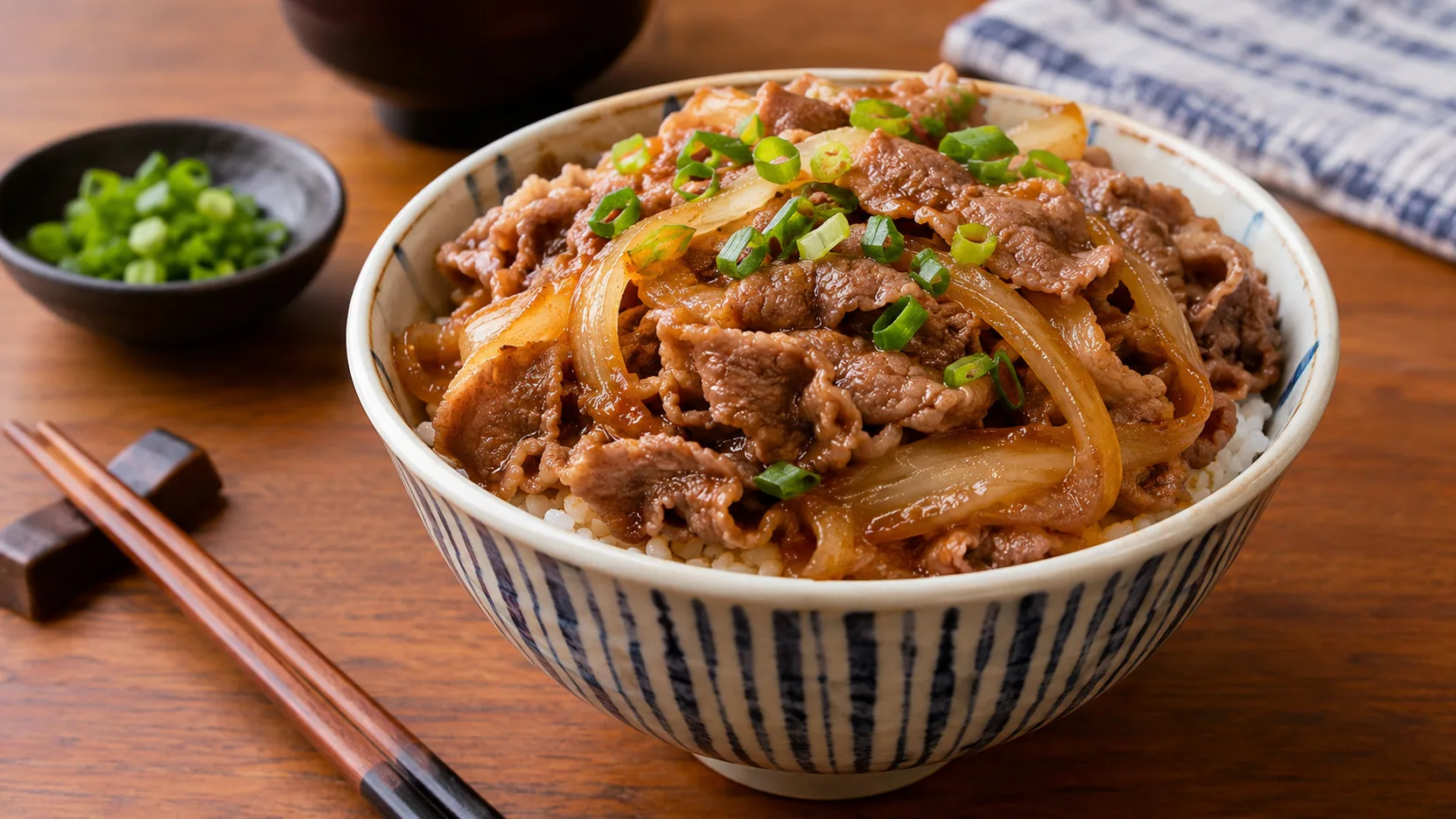
Ingredients
For the rice
• 360 g uncooked short-grain Japanese rice
• Water to cook the rice, in the amount indicated for the brand used
For the meat and onion
• 400 g of well-chilled soft thigh, cut against the grain into 2 to 3 mm slices
• 2 medium onions, approximately 300 g, cut into 5 mm half-moons
• 250 ml prepared dashi
• 50 ml soy sauce
• 40 ml of mirin
• 30 ml of dry culinary sake, preferably without added salt
• 18 g of sugar
• 2 stalks of chives, finely sliced
Preparation method
1. Cook the rice
Wash the rice until the water becomes less cloudy and cook with the amount of water indicated for the brand or using the usual method for Japanese rice. When finished, let it rest covered for 10 minutes and gently release the grains. Reserve about 200 g of cooked rice per bowl.
2. Slice the meat thinly
Cut the soft cushion against the fibers into 2 to 3 mm slices. If the piece is too soft to slice, place it in the freezer for about 20 minutes just to firm up; This optional time is not included in the total recipe time.
3. Start the sauce with the onion
In a wide pan or deep frying pan, mix the dashi, soy sauce, mirin, sake and sugar. Place over medium heat. When it starts to boil, add the onion, lower the heat to medium-low and cook for 4 to 5 minutes, until it is translucent and flexible, but still holds its shape.
4. Cook the meat without reducing the sauce too much
Separate the slices of meat with your hands and add them in two portions to avoid blocks. Cook at a gentle boil for 5 to 7 minutes, stirring just enough to loosen the slices. Remove surface foam if it appears. Turn off when the meat is cooked evenly and soft; the sauce should remain fluid, not thick like syrup.
5. Assemble the bowls
Distribute about 200 g of hot rice into each bowl. Place a quarter of the meat and onion on top and pour over 2 to 3 tablespoons of the cooking broth. Finish with chives and serve immediately.
Right spot / how to know it’s ready
The onion should be translucent, soft and bend without falling apart. The slices of meat should be cooked through, with no visible raw spots, but still moist and supple. The broth should have a sweet-salty flavor and remain liquid enough to moisten the rice; if it's syrupy or too dark, it's reduced too much.
Tips for the recipe to work out
Fine cut is more important than expensive cut
2 to 3 mm slices cook quickly and are more pleasant in the donburi. Soft thigh works well when cut against the fibers; Sirloin steak can make the result juicier as it contains more fat.
Cook the onion before the meat
The onion needs a few minutes to soften. If meat and onion go in together, it's easy to cook the meat longer while the onion is still firm.
Do not turn the sauce into a reduction
The gyudon needs broth to season the rice. Use a gentle boil and turn off once the meat is done; cooking for much longer concentrates the soy sauce salt and toughens the meat.
Adjust the salt according to the brand of soy sauce and culinary sake
Products vary greatly in salinity. If the broth is salty before the meat is added, add 20 to 30 ml of dashi; don't try to fix it just by adding more sugar.
Substitutions and variations
The soft thigh can be exchanged for very thinly sliced sirloin, which tends to be juicier, or for duckling, which is leaner and requires attention to avoid overcooking. Without mirin, use 35 ml of water and add another 10 g of sugar. The sauce loses part of its characteristic aroma, but maintains the balance between sweetness and salt. Without culinary sake, replace with the same volume of water; the flavor will be simpler. If there is no dashi, water can be used, but the sauce will have less umami. Avoid very concentrated or salty meat broth, as this changes the profile a lot and can make the whole thing excessively salty.
How to store
If you have leftover rice, spread it in a shallow container to cool quickly and refrigerate it preferably within 1 hour. Consume within 24 hours and reheat only once, until hot and completely releasing steam. The meat and onion topping can be stored separately in a shallow container and refrigerated within 2 hours of preparation. Use within 3 to 4 days. When reheating, bring the center to 74°C or heat until smoking hot. If the gyudon is already assembled with rice and topping in the same container, follow the shortest rice window: up to 24 hours.
How to serve / side dishes
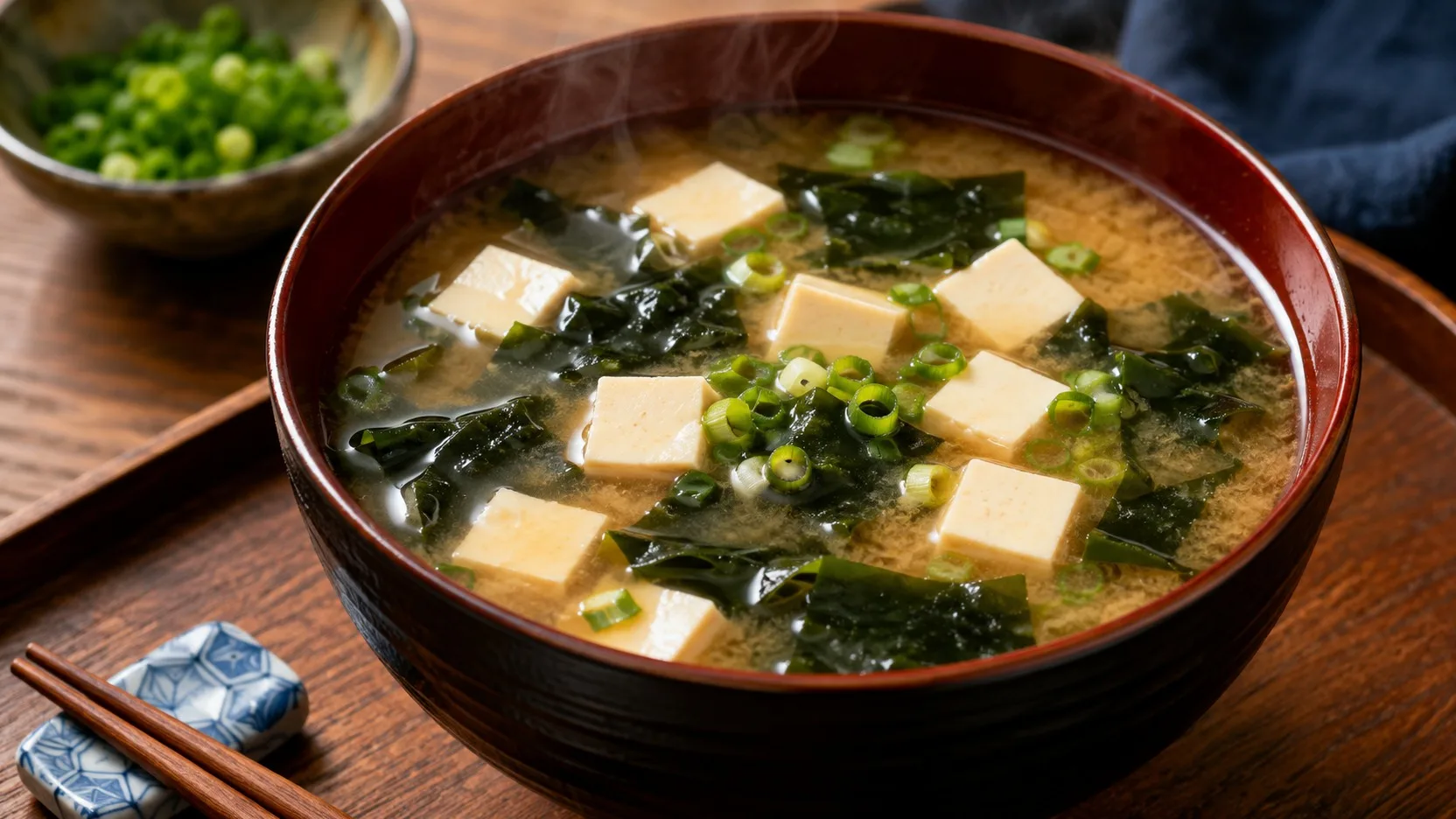
Serve the gyudon immediately after assembly, with chives on top. Beni shoga, the pickled red ginger used in many donburi, can be used as an optional accompaniment. A miso soup and Japanese pickles complete the meal without competing with the meat sauce.
Common mistakes
Why was the meat tough?
The most common causes are thick slices, cutting across the fibers or excessive heat time. Slice against the grain, keep 2 to 3 mm thick and use gentle boiling just until the meat is cooked through.
Why was the sauce too salty?
There was probably excessive reduction or the combination of soy sauce and culinary sake was saltier. Dilute with a little dashi and next time turn it off before the liquid concentrates.
Why was the onion raw while the meat was overcooked?
The onion came in too late or was cut too thick. Use half-moons of about 5 mm and give it 4 to 5 minutes head start before adding the meat.