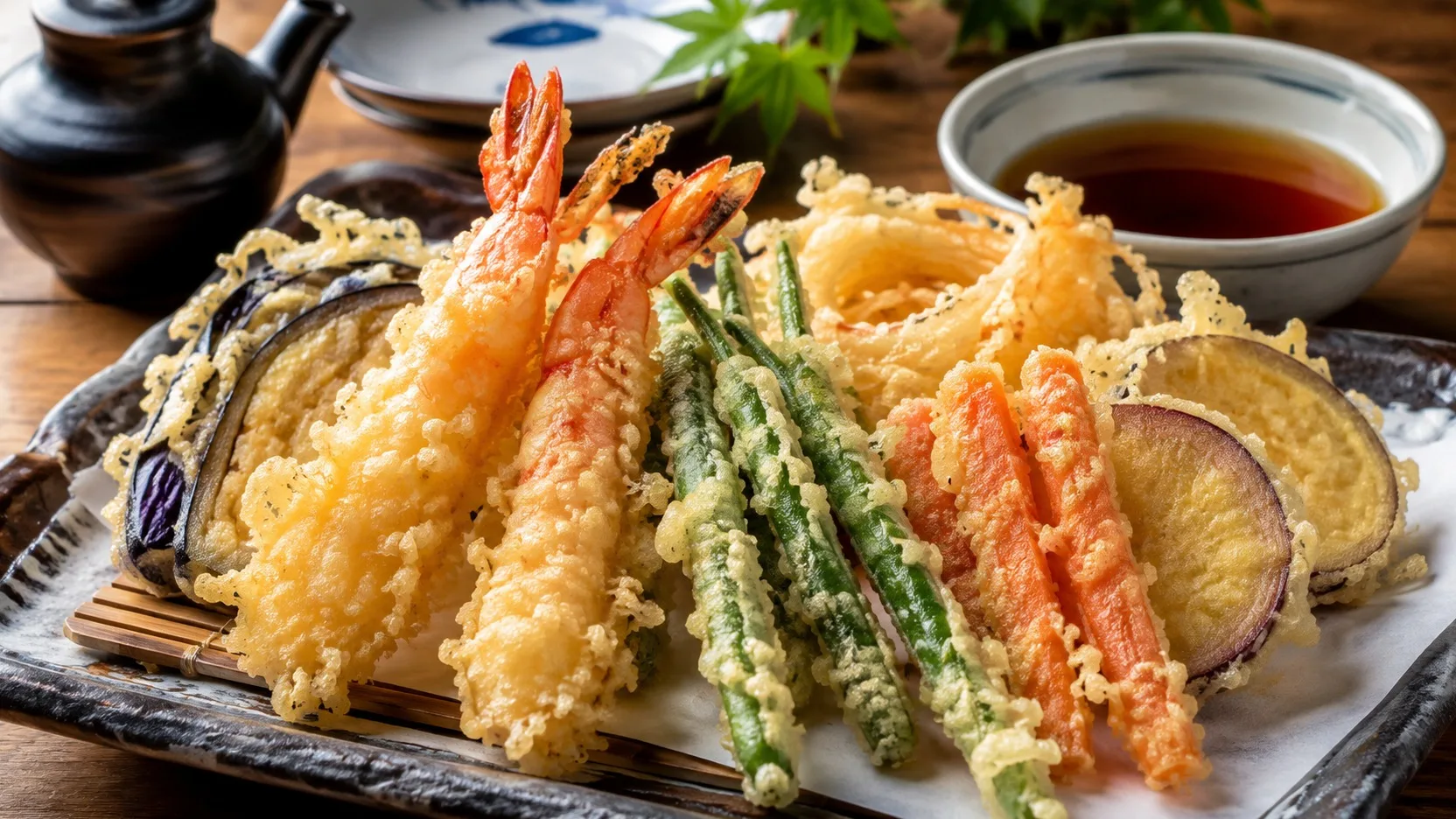
Ingredients
For the tempura
• 8 large raw prawns, around 300 g in total, peeled and cleaned, leaving the tail on
• 1 small sweet potato, approximately 200 g, well washed and cut into 5 mm slices
• 1 small eggplant, approximately 180 g, cut into 7 mm slices
• 1 medium carrot, approximately 120 g, cut into sticks approximately 5 mm thick and 5 cm long
• 100 g of green beans, trimmed and cut into 5 to 6 cm pieces
• 1 medium onion, approximately 120 g, cut into 8 mm slices and separated into wide rings
• 40 g of wheat flour for dusting
• Enough neutral vegetable oil to form a 4 to 5 cm layer in the pan, about 1.2 liters in a 20 cm diameter pan
For the dough
• 120 g of wheat flour, preferably chilled
• 30 g cornstarch
• 1 large chilled egg
• 200 ml of very cold water
For the tentsuyu sauce
• 180 ml of ready-made dashi
• 45 ml of soy sauce
• 30 ml of mirin
• 10 g of sugar, about 2 teaspoons
To serve, optional
• 80 g grated and lightly squeezed daikon
• 1 teaspoon of grated fresh ginger
Preparation method
1. Make the tentsuyu sauce
Place the dashi, soy sauce, mirin and sugar in a small saucepan. Place over medium heat until it starts to boil, then lower the heat and cook for about 1 minute, just until the sugar dissolves. Turn off and keep warm.
2. Prepare and dry the shrimp
If necessary, remove the shell leaving the tail and remove the intestinal tract. Make 3 or 4 shallow cuts on the underside of each shrimp and press gently to make it straighter. Dry very well with paper towel and keep refrigerated while preparing the vegetables.
3. Cut the vegetables into uniform thickness
Prepare the sweet potato, eggplant, carrot, green beans and onion in the indicated measurements. If there is moisture on the surface, dry it with a paper towel. Thin, even cuts help the ingredients cook before the topping gets too dark.
4. Heat the oil and organize the batches
Place the oil in a deep, stable pan, no more than half the height of the pan. Heat to 165°C to start with the denser vegetables. Leave a rack on a baking sheet next to the stove and keep a slotted spoon nearby to remove any dough residue between batches.
5. Mix the dough only when frying
In a bowl, quickly mix the egg with the ice water. In another bowl, combine the wheat flour and starch. Pour the liquid mixture over the dry ingredients and stir with chopsticks, fork or whisk for a few movements, just until most of the flour is hydrated. The dough should be fluid, cold and with small lumps; don't try to make it smooth.
6. Fry sweet potatoes, carrots and onions
Sprinkle a very thin layer of the reserved flour over the pieces and shake off the excess. Dip a few items at a time into the batter, let the excess drip off for 1 to 2 seconds, and place in the oil. Fry the sweet potato for 2.5 to 3 minutes, the carrot for about 2 minutes and the onion for 1½ to 2 minutes, turning when necessary. Keep the oil between 160 and 170 °C and do not cover more than approximately half of the surface of the pan.
7. Fry eggplant and green beans
Raise and stabilize the oil at around 170°C. Sprinkle lightly with flour, dredge in batter and fry in small batches. Eggplant usually takes about 1 to 1½ minutes; the pod, 1 to 2 minutes. Remove when the topping is firm and very lightly golden.
8. Fry the prawns
Increase the oil to 175 to 180 °C. Dip the dried shrimp in a thin layer of flour, shake off the excess and dip into the batter. Fry 2 or 3 at a time for about 1½ to 2 minutes, depending on their size. The shrimp should be opaque and pearly inside; If you use a culinary thermometer, the thickest part should reach 63 °C.
9. Drain without suffocating
Transfer each batch to wire rack and let excess oil drip off. Remove any loose batter fragments from the oil before adding the next batch and wait for the temperature to return to the indicated range. Avoid stacking pieces
hot, because the steam softens the coating.
10. Serve immediately
Distribute the tempurá on a platter and serve immediately after frying, with the warm tentsuyu. If desired, add a little grated daikon and ginger to the sauce for each serving.
Right spot / how to know it’s ready
The topping should be thin, irregular and crunchy, straw to very light golden in color, without a soggy appearance or a thick layer of dough. When it comes out of the oil, the surface should be firm and the bubbling around the piece should have reduced. The sweet potato should be soft when pierced, but not falling apart; the eggplant must be tender; the pod can still maintain a slight firmness. The shrimp should be opaque and pearly, without a translucent center; 63 °C at the thickest part is a safe reference when measurement is possible.
Tips for the recipe to work out
Keep the dough cold
Leave the egg, water and flour cold and mix the batter only when the oil is almost at temperature. Cold, lightly mixed dough reduces gluten development and favors a lighter topping.
Dry everything before breading
Water on the surface of vegetables and shrimp makes it difficult for the dough to adhere, lowers the temperature of the oil and increases spattering. Dry well before dredging in flour.
Fry in small batches
Too much food at once causes the temperature to drop quickly. When this happens, the coating takes longer to set and tends to absorb more oil.
Use color as a limit, not as a goal
Tempurá does not need to be brown. Remove when the topping is firm, crispy and just lightly browned; Too much browning usually means too hot oil or too much time for the cut used.
Remove waste between batches
Loose pieces of dough darken before the next ingredients and can leave a burnt oil taste. Remove them with a slotted spoon and bring them back to temperature before continuing.
Substitutions and variations
Corn starch can be replaced with the same amount of rice flour. The topping tends to become even more brittle and less elastic, but the amount of water may need to be adjusted slightly to keep the dough fluid.
Sweet potatoes, eggplant, carrots, green beans and onions can be exchanged for Japanese pumpkin, mushrooms, asparagus or peppers. Keep the cuts thin and adjust frying time to density: firm ingredients need more time and can benefit from the 160 to 170°C range.
If there is no ready-made dashi, use instant dashi prepared according to the proportion indicated by the manufacturer. The flavor of tentsuyu changes depending on the intensity of the broth; adjust only after tasting the finished sauce.
How to store
Tempurá has the best texture right after frying. If there is any leftovers, place in a shallow container and refrigerate for up to 2 hours, keeping at 4°C or below. Consume within 3 to 4 days. To reheat, place in a single layer in the oven or air fryer until hot and some of the crispiness has recovered; For leftover safety, the reheat reference is 74°C at the center. The microwave heats it, but it tends to soften the coating.
How to serve / side dishes
Serve with the warm tentsuyu in small bowls, without leaving the tempura dipped in the sauce before eating. Cooked Japanese rice, soba or plain udon go well together and transform tempura into a more complete meal.
Common mistakes
Why was my tempura oily and soggy?
The most common causes are cold oil, large batches, wet ingredients, or dough waiting too long before frying. Use a thermometer when possible, dry the ingredients and fry a little at a time.
Why did the icing become thick and hard?
The batter was probably thick, hot, or overmixed. It should fall off the ingredient in a thin layer, with small clumps still visible. If it thickens while you wait, don't beat it to smooth it out; prepare a small new portion if necessary.
Why did the dough come away from the ingredient?
A wet surface and excess flour encourage loosening. Dry well, use only a film of flour and, after placing the piece in the oil, wait a few seconds for the coating to set before stirring.
Why did the vegetable become raw before browning too much?
The cut was thick for the temperature used. For roots, work with slices of approximately 5 mm and slightly lower oil, around 160 to 170 °C, to give the inside time to cook without darkening the coating.