Ingredients
For the yakisoba
• 600 g pre-cooked or steamed yakisoba noodles, preferably chilled
• 300 g boneless pork loin, cut into thin strips against the fibers
• 2 tablespoons of neutral oil, divided
• Black pepper to taste
• 1 medium onion (about 150 g), cut into thin petals
• 1 medium carrot (about 100 g), thinly sliced
• 1/2 red pepper (about 80 g), in strips
• 120 g broccoli, in small florets
• 250 g of green cabbage, in pieces of approximately 3 cm
• 100 g bean sprouts, washed and well drained
• 2 chives, sliced
• 1 teaspoon of toasted sesame seeds, to finish
For the sauce
• 3 tablespoons of Worcestershire sauce (45 ml)
• 2 tablespoons of oyster sauce (30 ml)
• 1 tablespoon of ketchup (15 ml)
• 1 tablespoon of soy sauce (15 ml)
• 2 teaspoons of sugar (about 8 g)
Preparation method
1. Mix the sauce
In a small bowl, whisk together Worcestershire sauce, oyster sauce, ketchup, soy sauce and sugar until the sugar dissolves. The sauce should be smooth, fluid and with a concentrated flavor; it will be diluted by the natural moisture of the ingredients during sautéing.
2. Loosen and brown the noodles
Remove the pasta from the refrigerator about 10 minutes beforehand. Heat a wide frying pan, wok or griddle measuring at least 30cm over medium-high heat. Add 1 tablespoon of oil and add half of the noodles, without forcing them.
cold blocks. Let it heat up and brown for 1 to 2 minutes on each side; then gently release with tweezers or chopsticks. Set aside and repeat with the other half, using only the remaining oil in the pan.
3. Brown the meat
Increase heat to high. If the pan is dry, use some of the remaining oil. Distribute half of the meat in a single layer, season with pepper and sauté for 2 to 3 minutes, until it loses its raw appearance and gains golden brown spots. Set aside and repeat with the other half. Do not pile up the strips: the meat should fry, not cook in its own steam.
4. Saute the vegetables in order
Keep the heat high and add the rest of the oil, if necessary. Add the onion and carrot and sauté for about 1 minute. Add broccoli and peppers and cook for another 1 to 2 minutes. Add the cabbage and sauté for about 1 minute, just until it starts to wilt. Lastly, add the bean sprouts and mix for 30 seconds. If your pan doesn't hold the vegetables in a relatively loose layer, do this step in two batches.
5. Combine everything and season
Return the meat and pasta to the pan. Spread the sauce around the hot edge and immediately fold everything together with tongs or two spatulas for 1 to 2 minutes. The objective is to distribute a shiny film of sauce, not leaving liquid accumulated at the bottom. Turn off when the pasta is hot and the vegetables still have some firmness.
6. Finish and serve
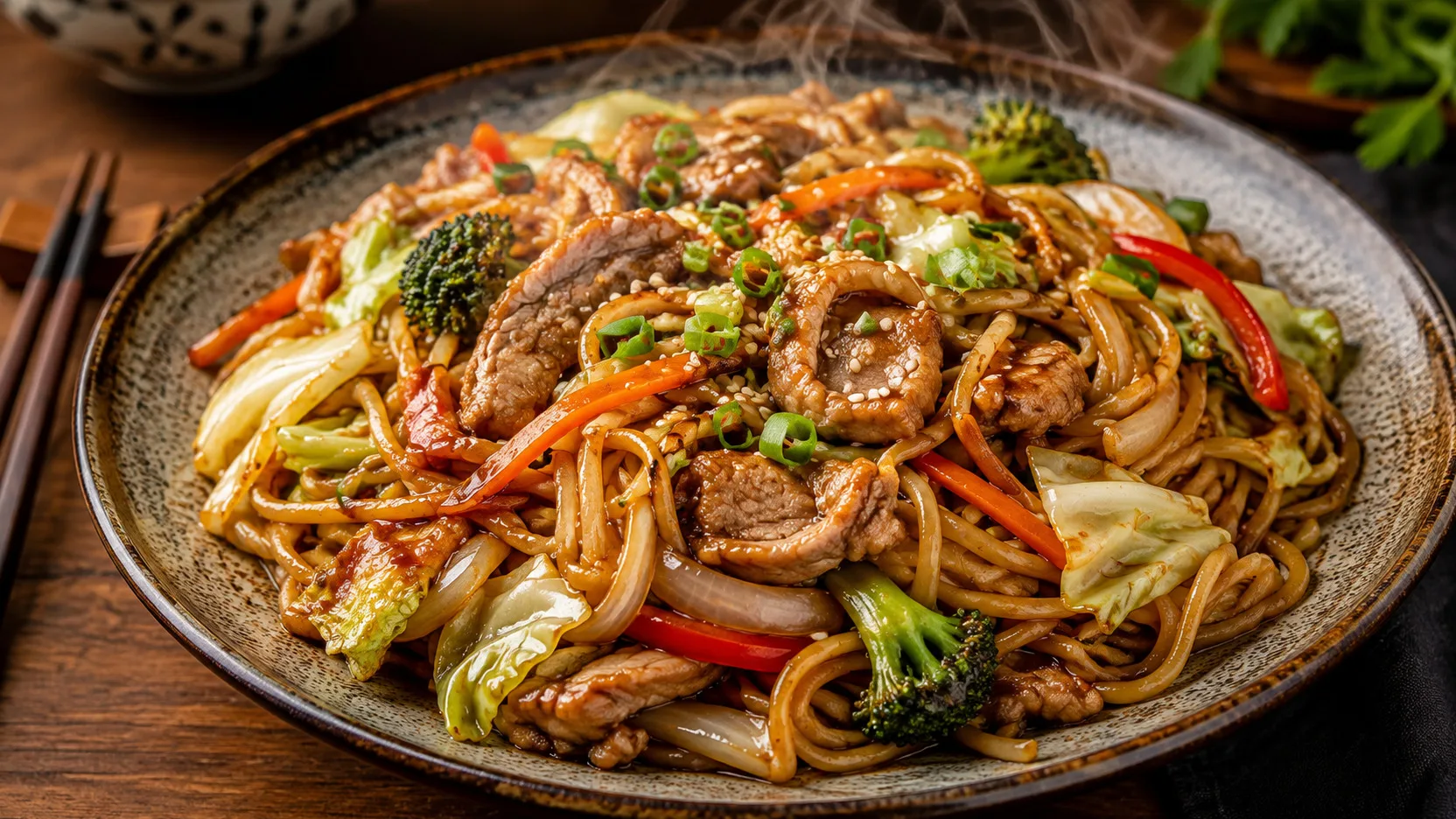
Mix half the chives, distribute the yakisoba on plates and finish with the remaining chives and sesame. Serve immediately, while the noodles still retain their golden brown spots.
Right spot / how to know it’s ready
The noodles should be hot, elastic and with some golden spots, without being puffy or soft. Vegetables should maintain a bright color and be slightly resistant to biting. The sauce should form a thin, shiny layer over the ingredients, without pooling at the bottom of the pan.. The pork must be completely cooked; As a safety reference for whole cuts of pork, the minimum internal temperature is 63°C with 3 minutes of rest.
Tips for the recipe to work out
Use yakisoba noodles
Pre-cooked or steamed pasta withstands the heat of the pan better. If you use pasta that needs to be boiled, drain it very well and let the surface dry before sautéing; Excess water favors a moist result without browning.
Give space for the heat to work
Small pan and crowded ingredients trap steam. Choose a wide surface and, if necessary, divide pasta, meat and vegetables into batches. This is the main difference between a golden stir-fry and a watery yakisoba.
Do not thicken the sauce with starch
In this style, the sauce is fluid and concentrated. It must adhere to the hair due to the rapid reduction in high heat, without turning into a thick broth. If there is liquid left at the bottom, keep the heat on high for a few seconds and continue mixing, rather than adding starch.
Cut vegetables into compatible thicknesses
Carrots and broccoli need smaller cuts than cabbage and bean sprouts. This way, the ingredients reach the point together without turning the most delicate ones into mushy vegetables.
Substitutions and variations
Can I swap the pork?
Yes. Boneless chicken thighs in strips work well, but must reach 74°C in the center. For a meatless version, use 300 g of well-drained and browned firm tofu before the vegetables; in that case, swap the oyster sauce for a vegetarian version.
Can I use ready-made sauce for yakisoba?
Yes. Use about 100 to 120 ml for 4 servings and add little by little. Ready-made sauces vary greatly in salt and sweetness, so taste before using the entire amount.
Do I need to use all these vegetables?
No. Keep approximately the same total volume and prioritize cabbage, onions and carrots. Broccoli and peppers can be replaced with shiitake or more bean sprouts; The cooking order must continue from the firmest ingredient to the most delicate.
How to store
Refrigerate leftovers in a shallow, closed container within 2 hours of preparation. Consume within 3 days. To reheat, use a frying pan or microwave until the entire dish is hot; leftovers should reach 74°C. Freezing is possible for about 1 month for best quality, but noodles and vegetables tend to lose firmness after thawing.
How to serve / side dishes
Serve as soon as it comes out of the pan. If you want to bring the presentation closer to the dish's common side dishes, offer aonori and beni shoga separately. A light miso soup or a vinegary cucumber salad balances the concentrated flavor of the dressing well.
Common mistakes
Why was my yakisoba watery?
The most common cause is too many ingredients in the pan, wet vegetables or freshly boiled pasta still in water. Work in batches, dry the vegetables well and give the noodles time to touch the hot surface before mixing.
Why did the noodles break when trying to release?
Very cold blocks become rigid and break when pulled by force. Heat it first, let the internal steam soften the hair and only then gently separate it.
Why was the sauce heavy and very sweet?
Too much ketchup, oyster sauce or sugar makes the joint dense. Maintain the proportions of the sauce, use high heat for a quick reduction and adjust only at the end, after tasting the combination with the pasta and vegetables.