Ingredients
For meat and velveting
• 450 g of rump, sirloin or tenderloin in 3 to 4 mm slices, cut against the fibers
• 30 ml of water, 2 tablespoons
• 15 ml soy sauce, 1 tablespoon
• 6 g of corn starch, 2 teaspoons (tea)
• 1 g of sodium bicarbonate, about 1/4 teaspoon (tea)
• 5 ml of neutral oil, 1 teaspoon (tea)
For the sauce
• 120 ml of water or unsalted broth
• 30 ml oyster sauce, 2 tablespoons
• 15 ml soy sauce, 1 tablespoon
• 5 ml dark soy sauce, 1 teaspoon, optional
• 10 ml Shaoxing wine or dry sherry, 2 teaspoons, optional
• 5 g of sugar, 1 teaspoon (tea)
• 6 g of corn starch, 2 teaspoons (tea)
• 5 ml toasted sesame oil, 1 teaspoon
• 1 pinch of white or black pepper
For the stir-fry
• 500 g of broccoli in medium florets, with the thickest stalks cut into slices
• 30 ml of neutral oil, 2 tablespoons, divided
• 2 cloves of garlic, chopped
• 1 teaspoon of grated or finely chopped fresh ginger
• 2 sliced spring onions, white and green parts separated
Preparation method
1. Velvet the meat
Place the meat in a bowl. Add the water, soy sauce and bicarbonate and massage for about 30 seconds, until the liquid is absorbed. Mix the starch and, finally, the oil. Cover and leave in the fridge for 20 minutes while you prepare the other ingredients. This thin layer helps the meat stay tender and brown without drying out too quickly.
2. Mix the sauce
In a small bowl, combine water or broth, oyster sauce, soy sauce, dark soy sauce and Shaoxing, if using, sugar, starch, sesame oil and pepper. Stir until the starch disappears into the liquid and set aside. Before pouring into the wok, stir again, as the starch will settle to the bottom.
3. Pre-cook the broccoli
Bring a pan of water to the boil. Add the broccoli and cook for 60 to 90 seconds, just until it turns bright green and begins to soften on the outside. Drain immediately and leave in the colander for a few minutes. The drier it goes into the wok, the less chance there is of the sauce becoming watery.
4. Seal the meat in batches
Heat the wok or a wide, heavy frying pan over high heat until very hot. Add 1 tablespoon of oil and spread half the meat in one layer. Leave without stirring for about 30 seconds and then sauté for another 30 to 60 seconds, until golden on the outside and almost cooked. Remove to a plate. Repeat with the other half and the remaining oil. Avoid crowding the meat: if the bottom cools, it releases liquid and steams.
5. Perfume the wok and thicken the sauce
With the wok still hot, turn down to medium-high heat. Add garlic, ginger and the white part of the chives and stir for 15 to 20 seconds, without letting the garlic darken. Stir the bowl of sauce well and pour it into the wok. When it boils, cook for 20 to 30 seconds, stirring, until it shines and thickens slightly.
6. Finish the stir-fry
Return the meat with any accumulated juices to the wok and add the broccoli. Sauté for 60 to 90 seconds, just until everything is hot and coated with a film of sauce. The meat should end up cooked, with no raw center, but still flexible. Turn off the heat, add the green part of the chives and serve immediately.
Right spot / how to know it’s ready
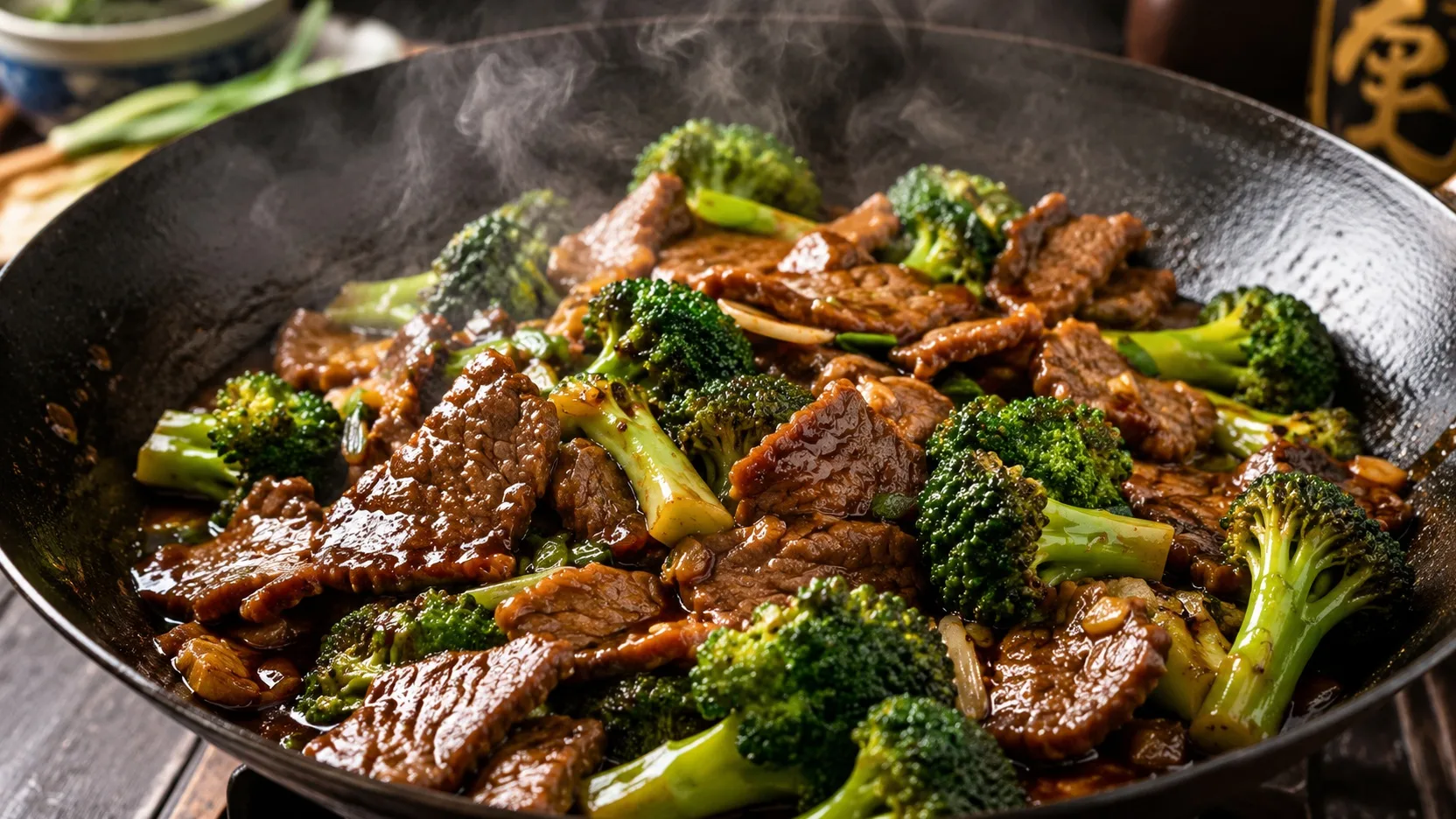
The meat should be golden around the edges and still tender to the bite, without the gray appearance of meat cooked in water. The broccoli turns bright green, with soft florets on the outside and stalks that still have a slight resistance. The sauce is done when it covers the meat and broccoli in a thin, glossy layer, without forming a thin pool at the bottom. When you tilt the wok, it should still drain slowly; If it becomes too pasty, correct it with 1 to 2 tablespoons of hot water.
Tips for the recipe to work out
Cut the meat against the fibers
Thin slices of 3 to 4 mm shorten the muscle fibers and cook quickly. If the piece is too soft to slice, leave it in the freezer for 15 minutes just to firm up before slicing.
Do not increase the bicarbonate
A small amount is enough to help with softness. Too much can leave an alkaline taste and an artificial texture. If you prefer not to use it, omit it; the meat will be a little less tender, but the recipe still works.
Drain the broccoli well
Water trapped between the florets dilutes the sauce. Let it drain while you sear the meat and do not transfer water from the pan to the wok.
Work in batches on the domestic stove
A restaurant wok receives much more heat than most home stoves. Dividing the meat into two batches preserves the temperature of the pan and improves the sealing.
Thicken only when the sauce boils
The starch needs to be well dispersed and heated in the liquid. Stir the mixture before using and wait for it to boil briefly before deciding if it needs further thickening.
Substitutions and variations
Rump, sirloin and tenderloin work well when sliced thinly against the fibers. Firmer cuts require even greater attention to thickness and cooking time.
Shaoxing can be replaced with the same amount of dry sherry. If you don't want to use alcohol, omit it and top up with 2 teaspoons of water; the sauce loses an aromatic layer, but maintains structure and
salinity.
Dark soy sauce is optional and serves mainly to deepen color and flavor. Without it, the sauce is lighter. Do not compensate with a large amount of regular soy sauce, as this can make the dish salty.
Frozen broccoli can be used in emergencies, but it tends to become softer and release more water. Thaw, drain and dry very well, and skip pre-cooking in water.
How to store
Refrigerate leftovers in a shallow, covered container within 2 hours of preparation. Keep at 4°C or below and consume within 3 to 4 days. To reheat, bring the entire portion to 74°C or until hot throughout; In the frying pan, a small spoonful of water helps to loosen the sauce without requiring prolonged heat.
Can be frozen in portions once cooled. For best quality, prefer to consume within 1 to 2 months; the broccoli will be softer after thawing.
How to serve / side dishes
Serve as soon as it comes out of the wok with white rice or jasmine rice, which absorb the sauce well. For a larger meal, pair it with simple sautéed vegetables or a light soup, avoiding very salty side dishes because the soy sauce and oyster sauce already concentrate a lot of flavor.
Common mistakes
Why was the meat tough?
The most common reasons are a thick cut or cut in favor of the fibers, a pan that is not hot enough, too much meat at once and too much time on the heat. Cut thinly, seal in batches and remove the meat while it is still almost cooked to finish in the sauce.
Why was the sauce watery?
Ill-drained broccoli, starch sitting at the bottom of the bowl or lack of boiling after adding the sauce are common causes. If everything is already in the wok and the sauce is still thin, increase the heat for a few seconds. Only add more starch after the sauce has had time to boil and reduce.
Why did the broccoli become mushy and discolored?
It probably stayed in the water too long or continued cooking for too many minutes in the sauce. Pre-cook for a short time, drain and leave the broccoli just long enough to heat up and receive the sauce in the final stage.