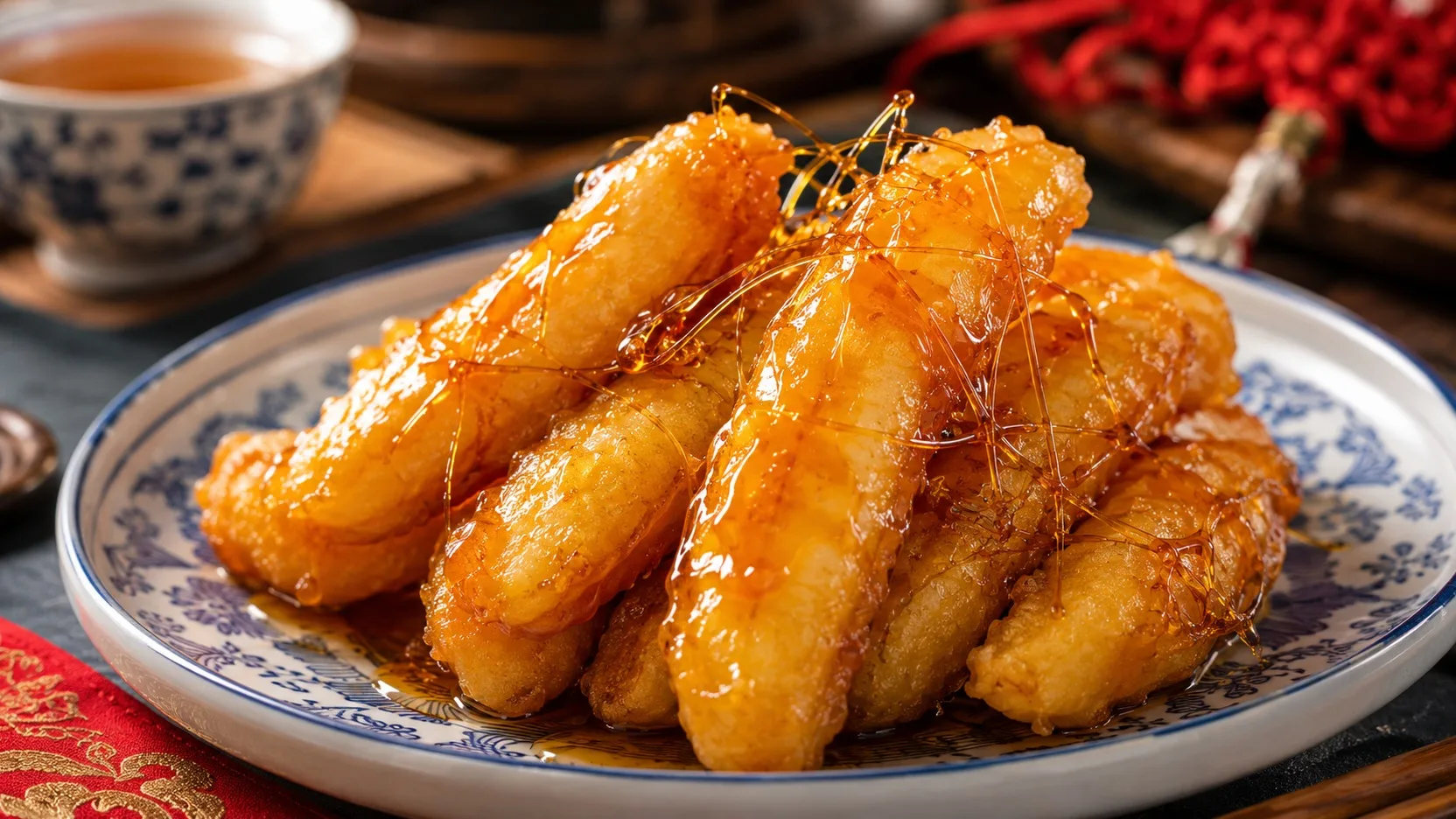
Ingredients
For the breaded banana
• 4 ripe but firm silver bananas
• 80 g of wheat flour
• 40 g of cornstarch, plus 20 g to coat the bananas
• 4 g of chemical baking powder (1 level teaspoon)
• 1 pinch of salt
• 140 ml of very cold water, more if necessary
• 5 ml of neutral vegetable oil (1 teaspoon)
• Enough neutral vegetable oil for deep frying, about 1 liter depending on the pan
For the caramel and the ice bath
• 180 g of refined sugar
• 60 ml of water
• 1 liter of very cold water
• 2 cups of ice cubes
Preparation method
1. Prepare the ice bath and cut the bananas
Place the cold water and ice in a wide bowl and place it next to the stove. Line another dish with a wire rack or paper towel. Peel the bananas and cut each one into 4 diagonal pieces. Gently dry the surface with a paper towel to help the breading adhere better.
2. Make a light dough
Mix the wheat flour, 40 g of starch, yeast and salt. Add the 140 ml of cold water and the oil and mix just until you get a smooth, fluid dough that can wrap around the banana in a layer.
thin. If it is so heavy that it forms a thick layer, add ice water 1 tablespoon at a time.
3. Heat the oil
Heat the oil in a deep pan to 180 to 185 °C. Keep space in the pan and do not fill more than about a third full with oil to reduce the risk of overflow during frying.
4. Bread and fry in small batches
Coat the banana pieces in 20 g of starch, removing the excess. Dip into the batter and let the excess drip off for a few seconds. Fry 4 to 5 pieces at a time for about 2 to 3 minutes, turning when necessary, until the crust is firm and lightly golden. Wait for the oil to return to the temperature range before the next batch. Drain well and keep the bananas separate.
5. Cook the caramel
Place the sugar and 60 ml of water in a wide frying pan or saucepan with a light bottom. Heat over medium heat and stir just at the beginning, until the sugar dissolves. When it boils, stop stirring; if necessary, just rotate the pan gently. Cook until it reaches approximately 160 to 165 °C and turns a light amber color. Remove from heat immediately to avoid bitterness.
6. Caramelize and cool quickly
With tongs or two forks, fold one piece of banana at a time into the caramel, letting the excess drip off. Immediately plunge into the ice bath for 2 to 3 seconds, just until the film hardens, and remove. Let it drain without piling up. Work quickly; If the caramel hardens too much in the pan, heat it for a few seconds over low heat until it becomes fluid again.
7. Serve immediately
Wait for the surface water to drain and then serve, while the breading is still crispy and the caramel topping is thin and crumbly. Contrast decreases as the sugar absorbs moisture from the environment.
Right spot / how to know it’s ready
Frying is done when the breading forms a thin layer, dry to the touch and slightly golden, without becoming soggy. The caramel should be light amber and fluid; at around 160 to 165 °C it already caramelizes and, when it touches ice water, it should form a hard film that cracks when you bite into it. If the icing bends or chews instead of breaking, the sugar has not yet reached the point where it needs to be.
Tips for the recipe to work out
Use ripe but firm banana
A very green banana has little flavor and a very ripe banana softens quickly during frying. Firm silver bananas tolerate heat better; If using a softer variety, reduce the frying time by a few seconds.
Control the temperature between batches
Cold oil makes the dough absorb fat and become heavy. Frying a few units at a time helps maintain the range of 180 to 185 °C and preserves the texture of the banana.
Do not stir the caramel after it starts to boil
Agitation and sugar crystals on the sides can stimulate crystallization. After dissolving the sugar, just swirl the pan gently and use clean, dry utensils.
Organize everything before the caramel
The interval between covering the banana and immersing it in ice needs to be short. Have fried bananas, iced bath, utensils and platter ready before starting to cook the sugar.
Be careful with melted sugar
Hot caramel sticks to the skin and can cause serious burns. Use long tongs, keep children away and do not touch the icing until it has been in the cold bath and hardened.
Substitutions and variations
The dwarf banana can replace the silver banana if it is firm, but it is softer and sweeter; use slightly larger pieces and fry for the shortest time necessary to brown the dough. For a slightly lighter crust, you can replace up to half of the wheat flour with rice flour. The icing tends to become drier and more brittle, but the adhesion may change and it may be necessary to adjust the ice water in small quantities. The same method can be applied to firm pieces of well-dried apple or pineapple, but the frying time varies depending on the thickness and amount of water in the fruit.
How to store
This dessert loses its main quality quickly: the sugar film absorbs moisture and becomes sticky. The best thing is to caramelize only what will be served immediately. If there is leftovers, do not leave them at room temperature for more than 2 hours; refrigerate in a closed container and consume within 3 to 4 days, knowing that the crunchiness will not be completely recovered. Freezing is not recommended to preserve the texture of the breading and caramel.
How to serve / side dishes
Serve alone right after an ice-cold bath or with a small portion of ice cream on the side. If you use ice cream, keep it separate until ready to eat so as not to moisten the sugar cone.
Common mistakes
Why was the caramel sticky instead of hard?
The sugar may have been removed before the brittle stage, or the dessert may have been exposed to moisture for too long. Bring the caramel until light amber, cool for a few seconds on ice, drain well and serve immediately.
Why was the caramel bitter?
The sugar is overcooked. The color darkens very quickly at the end of cooking and the residual heat from the pan continues to act after the heat is turned off. Remove as soon as it reaches light amber and start coating the bananas without delay.
Why did the breading come off the banana?
A wet surface and the absence of a thin layer of starch make adhesion difficult. Dry the fruit, coat in starch before adding the dough and let the excess dough drain off before frying.
Why did the banana become soft and greasy?
Very ripe banana or oil below the frying range favor this result. Use firm fruit, make small batches and wait for the oil to return to 180 to 185°C before adding more pieces.