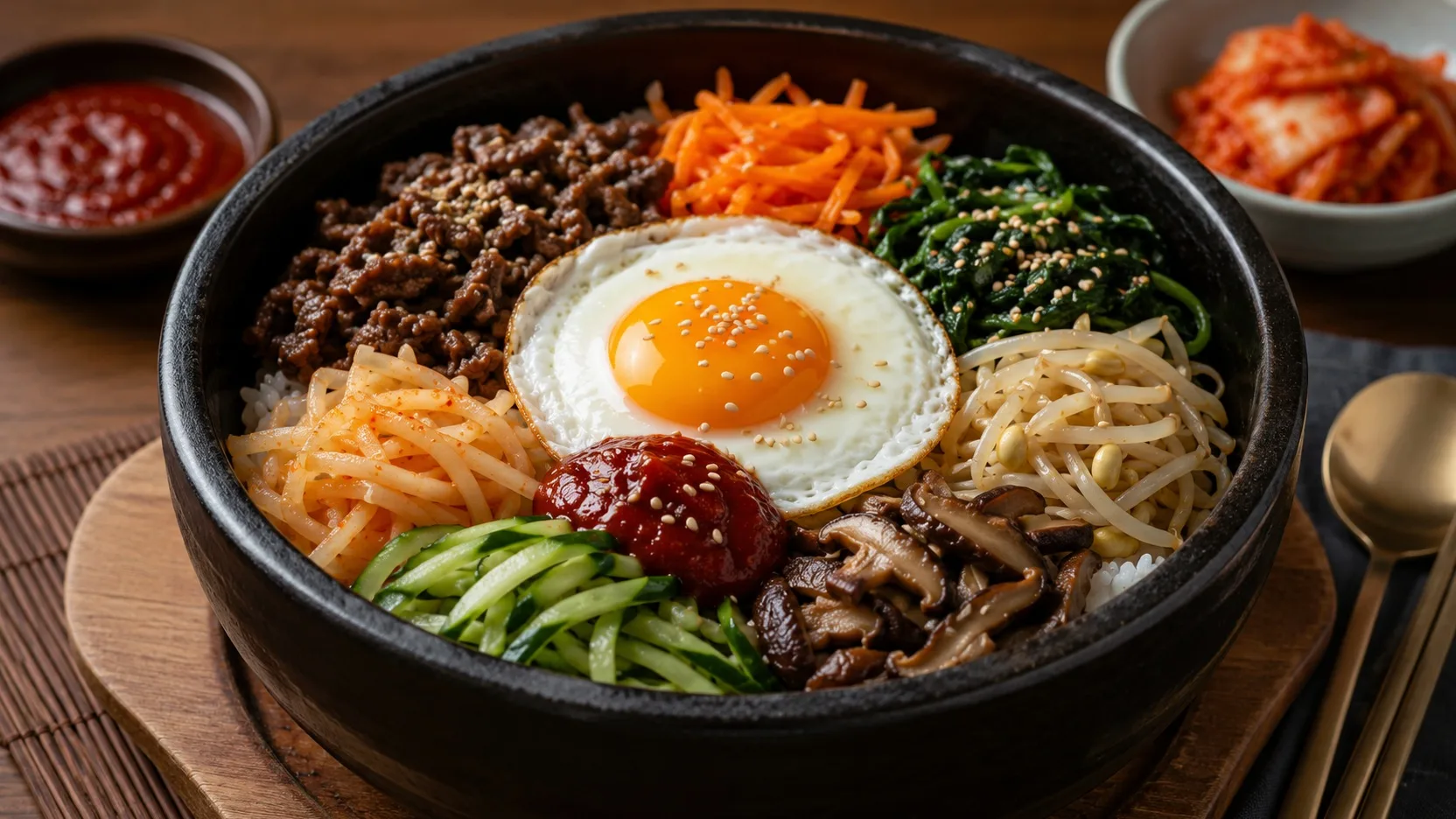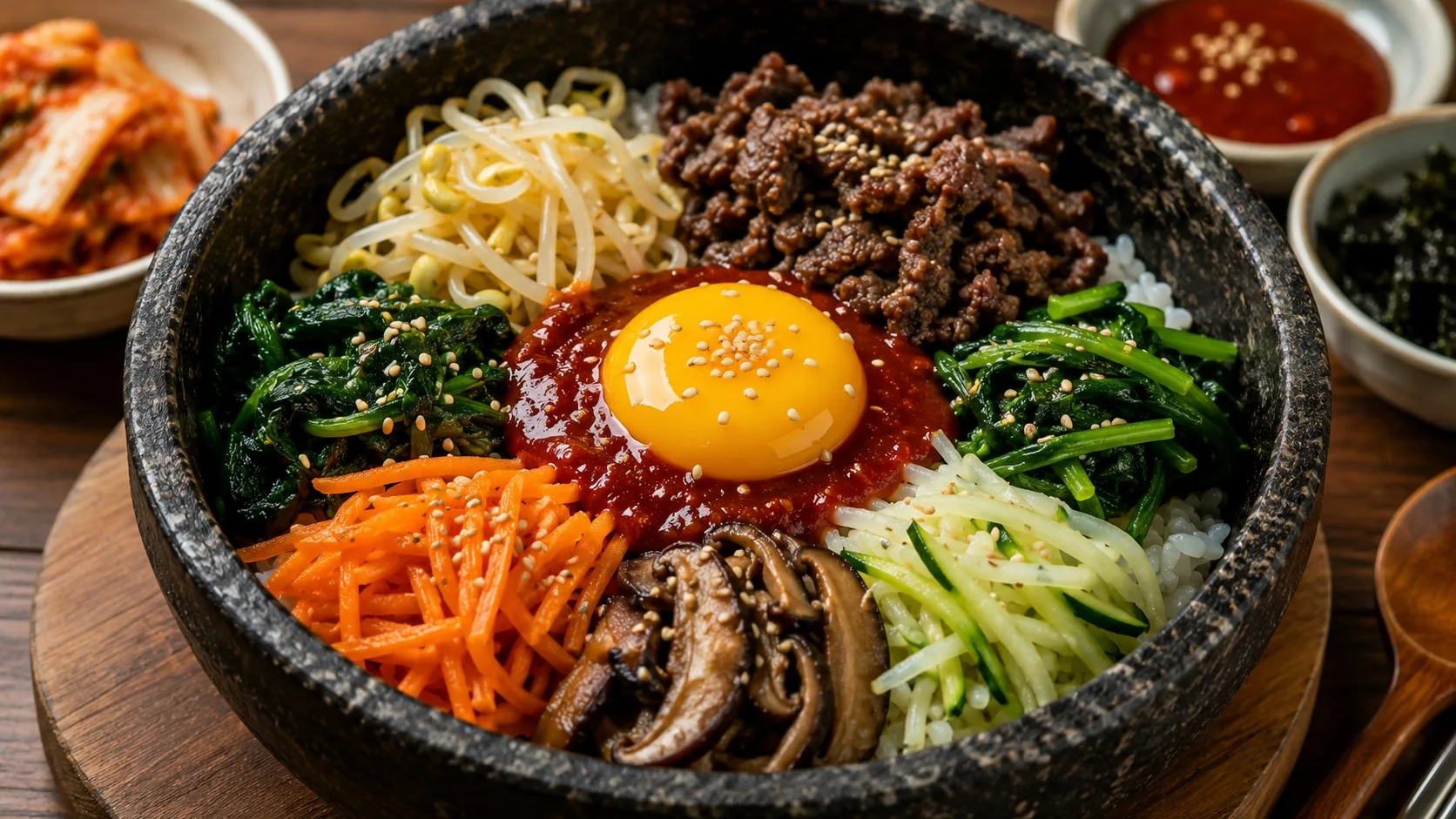
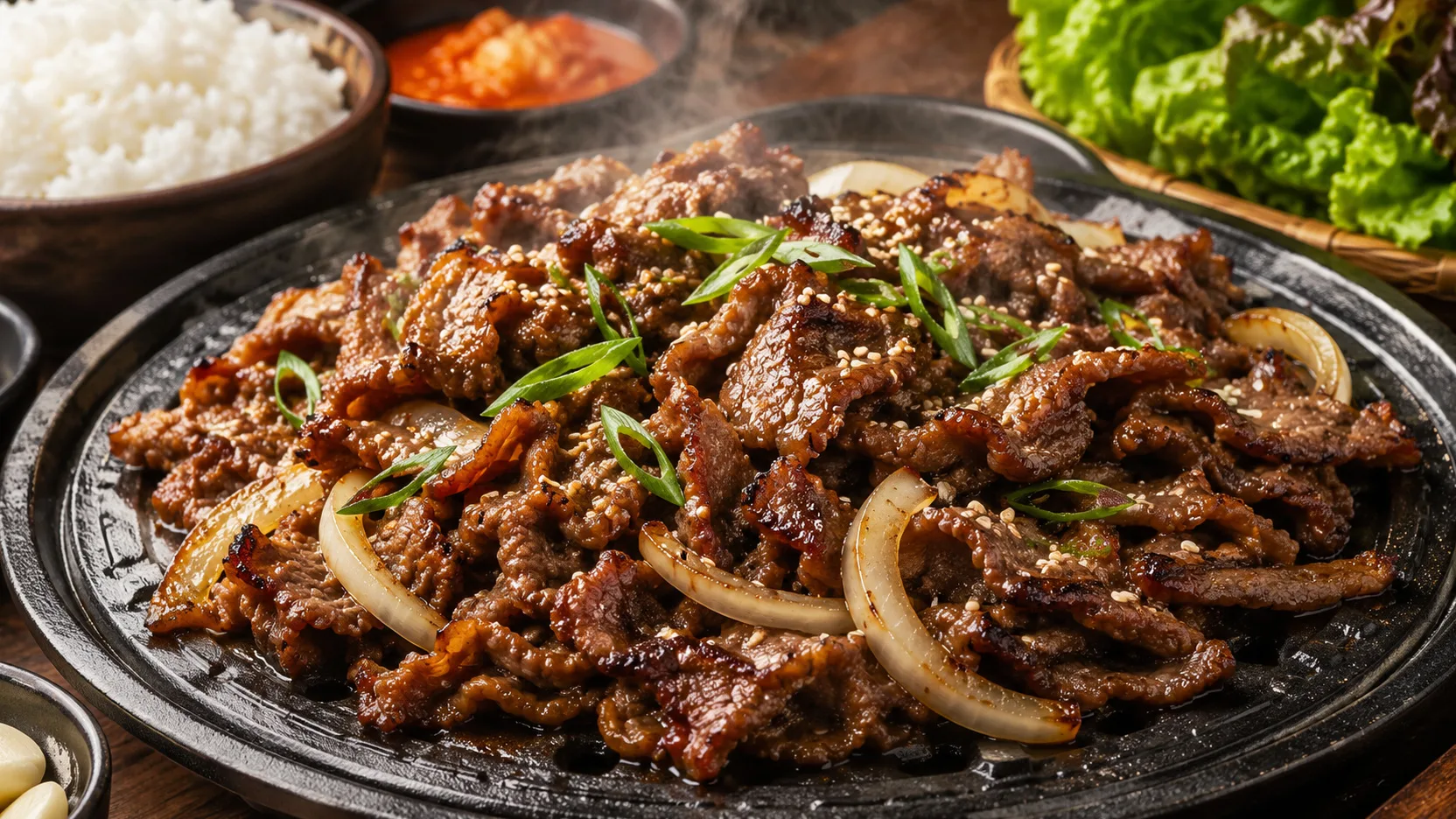
Bulgogi is a Korean preparation of thinly sliced and marinated beef. In this home kitchen version, the focus is on keeping the pan hot and working in small batches so that the meat browns and caramelizes instead of simmering in the marinade.
Ingredients
For the meat and marinade
• 600 g sirloin or rump, in pieces
• 60 g peeled Asian pear, finely grated
• 35 g onion, finely grated
• 45 ml of soy sauce
• 20 g brown sugar
• 15 ml of mirin
• 15 ml toasted sesame oil
• 12 g of finely chopped or grated garlic
• 1/4 teaspoon ground black pepper
To finish
• 80 g of onion, cut into thin half-moons
• 2 stalks of chives, sliced diagonally
• 1 tablespoon of toasted sesame seeds
• 1 teaspoon of neutral oil, only if the pan requires it
Preparation method
1. Firm the meat for slicing
Dry the piece with paper towel and place in the freezer for 45 to 60 minutes, until firm around the edges but still cuttable. This cooling makes it easier to obtain regular slices without freezing the meat completely.
2. Cut against the grain
Using a very sharp knife, cut the meat against the grain into slices measuring approximately 2 to 3 mm. Separate the slices with your fingers so that the marinade reaches the entire surface.
3. Prepare the marinade
Mix the grated pear, grated onion, soy sauce, brown sugar, mirin, sesame oil, garlic and pepper until the sugar begins to dissolve.
4. Marine under refrigeration
Add the meat to the marinade and gently coat all the slices. Cover and refrigerate for 30 to 60 minutes. For soft cuts and thin slices, this time is enough to season without leaving the surface excessively soft.
5. Heat the frying pan well
Use a wide, heavy frying pan, preferably cast iron or stainless steel. Heat on high heat for 3 to 4 minutes. If necessary, spread only a film of neutral oil. The surface must be very hot before receiving the meat.
6. Brown in small batches
Remove a portion of the meat from the marinade with tongs, allowing the excess to drain. Distribute in a single layer, without mounding. Cook for about 60 to 90 seconds without stirring too much, turn and finish for another 30 to 60 seconds, until the edges darken and the surface is shiny and caramelized. Transfer to a plate and repeat, reheating the pan between batches. Discard remaining raw marinade.
7. Brown the onion and finish
When all the meat is ready, add the sliced onion to the pan and sauté for 1 to 2 minutes, just until it loses its raw taste and gains golden brown spots. Return the meat to the skillet for 20 to 30 seconds, just to heat and mix. Turn off and finish with chives and sesame.
Right spot / how to know it’s ready
The bulgogi should have separate slices, moist inside and with dark brown dots on the edges. The pan may have a shiny film of fat and caramelized sugar, but it should not collect a pool of liquid. The slices must not have a raw surface. As they are very thin, measuring each blade is impractical; When it is possible to measure a small bundle of meat, 63°C with 3 minutes of rest is the safe reference for whole beef cuts.
Tips for the recipe to work out
Thin cut is worth more than long marinade
The softness largely depends on the cut against the fibers and the thickness of 2 to 3 mm. A long marinade will not correct slices that are thick or cut across the grain.
Do not pour the bowl of marinade into the frying pan
For this more grilled result, remove the meat with tongs and let the excess drip off. Too much liquid drops the temperature of the pan and turns cooking into boiling.
Reheat the pan between batches
After removing each portion, wait for the pan to regain heat before continuing. If the surface is covered in burnt sugar, clean it carefully and reheat it before the next batch.
Watch the sugar
Sugar, pear and onion help with shine and caramelization, but they burn quickly. The fire must be high and the time short; Don't leave a batch forgotten in the pan.
Substitutions and variations
If you can't find Asian pear
Use the same amount of ripe Bosc pear or grated Fuji apple. The apple delivers sweetness and moisture, but tends to soften less; In this case, pay even more attention to the thin cut and choose a naturally tender beef cut. Avoid substituting kiwi or fresh pineapple in the same proportion, which have a much more aggressive softening action and can leave the surface pasty.
If you use a leaner cut
Duckling may work if it is cleaned very well and sliced thinly, but it is less tolerant of overcooking. Reduce the time in the frying pan and remove as soon as the surfaces are cooked and golden.
If you don't have mirin
Replace with 15 ml of dry culinary sake and add 1 teaspoon of sugar to the marinade. If you prefer to omit the alcohol, use 15 ml of water; the flavor is a little less rounded, but the structure of the recipe is maintained.
How to store
Once ready, transfer the bulgogi that will not be served to a shallow container and refrigerate for up to 2 hours. Keep at 4°C or below and consume within 3 to 4 days. For best quality, it can be frozen for about 2 to 3 months. Reheat until it reaches 74°C in the center or is completely smoking. Do not reuse marinade that has had contact with raw meat without adequate cooking.
How to serve / side dishes
Serve immediately with white rice. To assemble ssam, place a small portion of rice and bulgogi on lettuce or perilla leaves and add ssamjang if you have it. Kimchi and other tangy or crunchy banchan balance the sweetness of the marinade.
Common mistakes
Why did my bulgogi collect water?
The most common cause is an insufficiently hot pan, meat piled up or excess marinade entering the pan. Cook less meat at a time and wait for the metal to regain heat before the next batch.
Why was the meat tough?
Thick slices, cutting across the fibers and excessive cooking time make the bulgogi chewy. Firm the piece in the freezer, cut against the fibers and work with thin blades.
Why did it burn before it browned properly?
Sugar and pear residues can carbonize after several batches. If a bitter black crust appears, remove the pan from the heat for a few seconds, carefully wipe off the residue and reheat before continuing.