Ingredients
For the sauce and marinade
• 4 tablespoons of soy sauce (60 ml)
• 1 and 1/2 tablespoons of brown or refined sugar (18 g)
• 1 and 1/2 tablespoon of toasted sesame oil (22 ml)
• 2 small cloves of garlic, grated or finely chopped
• 1/4 teaspoon ground black pepper
For the japchae
• 220 g dangmyeon, the Korean sweet potato starch noodle
• 180 g sirloin or rump, in thin strips of approximately 4 mm
• 120 g fresh shiitake mushrooms, sliced
• 120 g of spinach
• 1 medium carrot (about 120 g), thinly sliced
• 1 small onion (about 120 g), thinly sliced
• 1/2 red pepper (about 80 g), in thin strips
• 2 spring onions, cut into 4 to 5 cm pieces
• 1 and 1/2 tablespoon of neutral vegetable oil (22 ml), divided
• 1 tablespoon of toasted sesame seeds
Preparation method
1. Mix the sauce and season the meat
In a bowl, mix the soy sauce, sugar, sesame oil, garlic and pepper until the sugar begins to dissolve. Separate 2 tablespoons of this mixture into another bowl, add the meat and mix well. Let it marinate for 15 minutes while you prepare the other components. Reserve the rest of the sauce without contact with the raw meat.
2. Blanch and dry the spinach
Place a large pan of water over high heat. Once boiling, submerge the spinach for 30 to 45 seconds, just until wilted and bright green. Remove with tongs or slotted spoon and rinse under cold water. Squeeze very well to remove the water, cut two or three times and set aside.
3. Cook and season the dangmyeon
In the same boiling water, cook the dangmyeon as directed on the package, generally for 6 to 8 minutes, stirring for the first few minutes to prevent the threads from sticking together. Try a strand: it should be translucent, flexible and elastic, without a hard core. Drain very well, cut the threads two or three times with kitchen scissors and, while still hot, mix with 2 tablespoons of the reserved sauce. Leave in a large bowl while you sauté the other ingredients.
4. Sauté onion and chives
Heat a large frying pan or wok over medium-high heat. Add 1 teaspoon of vegetable oil, onion and chives. Sauté for about 2 minutes, until the onion loses its raw appearance, but still retains some firmness. Transfer to the pasta bowl.
5. Brown the mushrooms
In the same frying pan, heat another 1 teaspoon of oil. Spread the shiitake in one layer and sauté for 2 to 3 minutes, until softened and golden brown. Avoid crowding so that the mushroom does not release excess liquid. Add to the bowl.
6. Preserve the color of vegetables
Heat another 1 teaspoon of oil and sauté the carrot for about 1 minute. Add the pepper and cook for another 45 to 60 seconds. The vegetables should be warm and slightly soft, but still firm and colorful. Transfer to bowl.
7. Sauté the meat over high heat
Increase the heat, heat the remaining oil and place the meat drained from the marinade in one layer. Saute for 2 to 4 minutes, stirring only as necessary, until the strips are golden at the edges and no raw parts are visible. If the pan is small, do it in two batches so as not to cook the meat in its own liquid.
8. Finish without soaking the noodles
Return the noodles, vegetables, shiitake mushrooms and spinach to the pan with the meat. Add the rest of the sauce little by little and mix over medium heat for 2 to 3 minutes.. Stop when the strands are shiny and seasoned and there is no sauce pooling on the bottom. Turn off, sprinkle the sesame and mix once more.
Right spot / how to know it’s ready
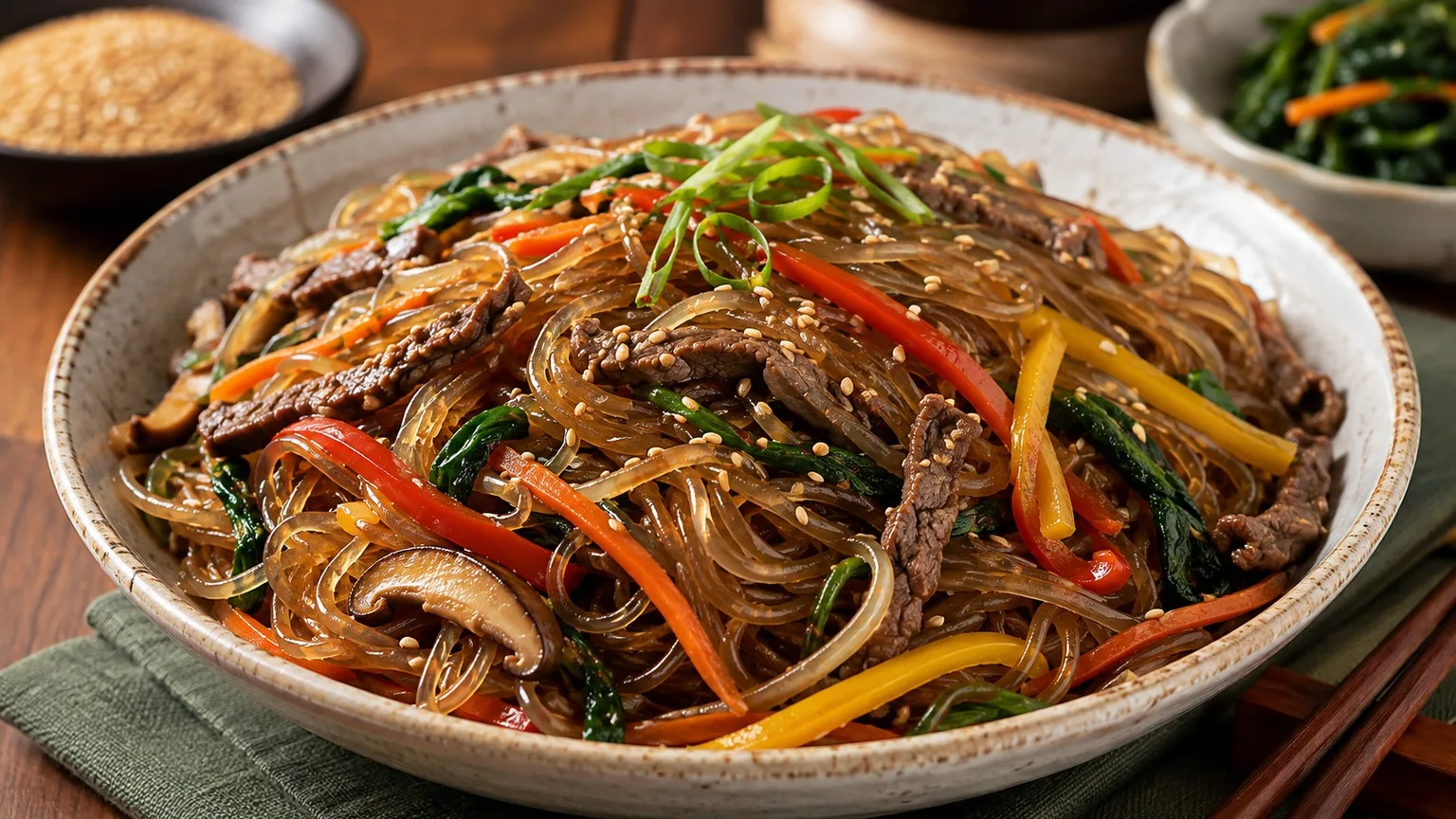
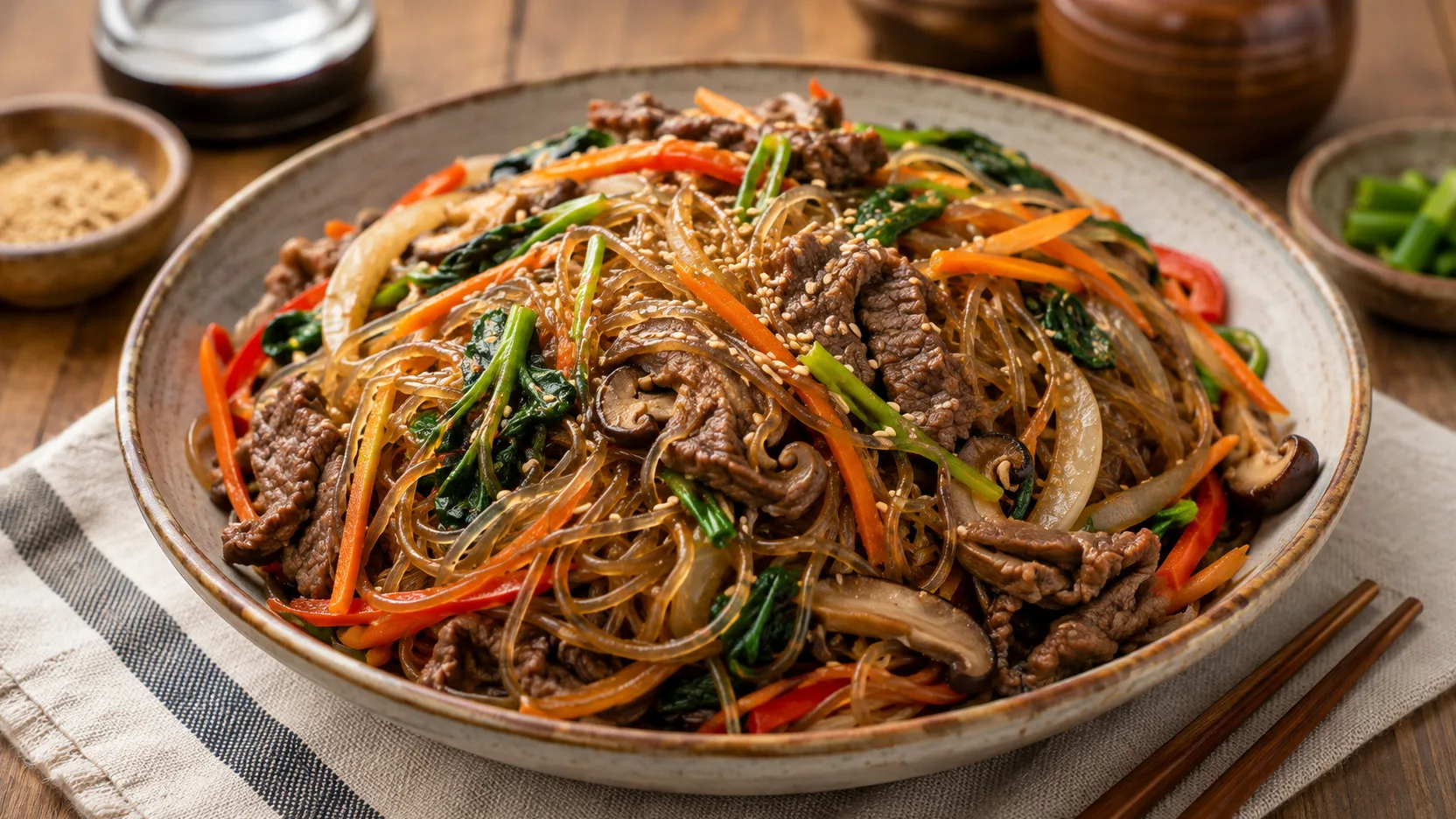
The dangmyeon should be translucent, flexible and elastic, without a hard part in the center and without turning into a sticky mass. The strands are loose and shiny, with the sauce adhered and without a pool of liquid at the bottom. The carrot and pepper remain alive and slightly firm; the shiitake is soft and golden; and the meat must be completely cooked, with no raw areas.
Tips for the recipe to work out
Cut everything before turning on the frying pan
The sautéing happens quickly. Leaving meat and vegetables already cut prevents one component from overcooking while the next is still being prepared.
Season the dangmyeon while it is still hot
Mixing some of the sauce right after draining helps the strands absorb flavor and reduces the tendency for them to stick together while the other ingredients are ready.
Remove excess water from the spinach
Barely squeezed spinach dilutes the sauce and turns the bottom of the pan into broth. Squeeze until it stops dripping before adding it to the japchae.
Use a very large frying pan
The more space the ingredients have, the easier it is to brown meat and mushrooms and preserve the texture of the vegetables. In a small pan, work in batches.
Add the final sauce gradually
Shoyu brands vary greatly in salt. Adding the sauce little by little allows you to stop when the pasta is well seasoned and there is no liquid left.
Substitutions and variations
The striploin or rump can be exchanged for pork loin in thin strips, adjusting the time until the meat is completely cooked. For a meatless version, use well-pressed, browned firm tofu; the texture is different, but it absorbs the sauce well.
Fresh shiitake can be replaced with shimeji or paris mushroom. The flavor becomes less intense, so it's worth browning the mushrooms well to concentrate the aroma.
Dangmyeon is the ingredient that gives japchae its characteristic texture. Mung bean vermicelli can work in an adaptation, but it is more delicate and usually cooks faster; follow the packaging time and expect less elastic yarn.
How to store
Let the japchae lose its intense steam and refrigerate in a shallow, closed container within 2 hours of preparation. Keep at 4°C or below and consume within 3 days. To reheat, heat only the desired portion until hot throughout; For an objective reference of safety, reheated leftovers should reach 74°C in the center.
Freezing is possible from a conservation point of view, but it is not the best choice for texture: vegetables can soften and the strands can become more brittle after thawing. For best results, prefer to consume fresh or refrigerated.
How to serve / side dishes
Serve the japchae warm or soon after it reaches room temperature. It works as a light main dish or as part of a Korean meal with rice, kimchi and other sides. If exposed during the meal, do not leave it unrefrigerated for more than 2 hours.
Common mistakes
Why did my dangmyeon stick?
The threads may have been overcooked or left drained and unseasoned for too long. Cook just until they are elastic, drain well and mix in some of the sauce while they are still hot.
Why was the japchae watery?
The most common causes are poorly squeezed spinach, mushrooms cooked in a crowded pan or sauce added all at once. Dry the components well, use high heat and add the final sauce gradually.
Why did the vegetables lose their color and crunch?
When everyone enters together, the more delicate ones are ready before the more firm ones. Sautéing in small batches for short times best preserves color and texture.
Why was it salty?
The sodium content of soy sauce changes a lot between brands. Use the final sauce little by little and taste before the last addition. If it is already salty, increase the proportion of vegetables or dangmyeon without adding more soy sauce.